An Object Lesson from Jeremiah

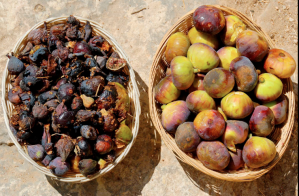
The Lord showed me two baskets of figs placed before the temple of the Lord. This was after King Nebuchadrezzar of Babylon had taken into exile from Jerusalem King Jeconiah son of Jehoiakim of Judah, together with the officials of Judah, the artisans, and the smiths, and had brought them to Babylon. One basket had very good figs, like first-ripe figs, but the other basket had very bad figs, so bad that they could not be eaten. And the Lord said to me, “What do you see, Jeremiah?” I said, “Figs, the good figs very good, and the bad figs very bad, so bad that they cannot be eaten.” Then the word of the Lord came to me: Thus says the Lord, the God of Israel: Like these good figs, so I will regard as good the exiles from Judah, whom I have sent away from this place to the land of the Chaldeans. I will set my eyes upon them for good, and I will bring them back to this land. I will build them up, and not tear them down; I will plant them, and not pluck them up. I will give them a heart to know that I am the Lord; and they shall be my people and I will be their God, for they shall return to me with their whole heart. But thus says the Lord: Like the bad figs that are so bad they cannot be eaten, so will I treat King Zedekiah of Judah, his officials, the remnant of Jerusalem who remain in this land, and those who live in the land of Egypt. I will make them a horror, an evil thing, to all the kingdoms of the earth—a disgrace, a byword, a taunt, and a curse in all the places where I shall drive them.And I will send sword, famine, and pestilence upon them, until they are utterly destroyed from the land that I gave to them and their ancestors. (Jeremiah 24:1-10, NRSV)

So some are like good figs and some are like bad figs.

And many might claim that the good figs are the bad figs while the bad figs are the good figs…

What did he just say?

Most would think that those who were sent into captivity would be the bad figs. Those who are weak and allowed themselves to be captured are not good figs. They do not deserve to be remembered. But actually, those who did not get captured and sent into captivity are the ones who have not followed after the Lord and kept His ways. So they are truly that bad figs.

So which are you, a good fig or a bad fig?

Do you follow after the ways of the Lord even when it could cause you trouble?

If you are a bad fig, what can you do to change your ways and become a good fig?

Jeremiah’s Call

Now the word of the Lord came to me saying, “Before I formed you in the womb I knew you, and before you were born I consecrated you; I appointed you a prophet to the nations.” Then I said, “Ah, Lord God! Truly I do not know how to speak, for I am only a boy.” But the Lord said to me, “Do not say, ‘I am only a boy’; for you shall go to all to whom I send you, and you shall speak whatever I command you, Do not be afraid of them, for I am with you to deliver you, says the Lord.” Then the Lord put out his hand and touched my mouth; and the Lord said to me, “Now I have put my words in your mouth. See, today I appoint you over nations and over kingdoms, to pluck up and to pull down, to destroy and to overthrow, to build and to plant.” The word that came to Jeremiah from the Lord: Stand in the gate of the Lord’s house, and proclaim there this word, and say, Hear the word of the Lord, all you people of Judah, you that enter these gates to worship the Lord. Thus says the Lord of hosts, the God of Israel: Amend your ways and your doings, and let me dwell with you in this place. Do not trust in these deceptive words: “This is the temple of the Lord, the temple of the Lord, the temple of the Lord.” For if you truly amend your ways and your doings, if you truly act justly one with another, if you do not oppress the alien, the orphan, and the widow, or shed innocent blood in this place, and if you do not go after other gods to your own hurt, then I will dwell with you in this place, in the land that I gave of old to your ancestors forever and ever. Here you are, trusting in deceptive words to no avail. Will you steal, murder, commit adultery, swear falsely, make offerings to Baal, and go after other gods that you have not known, and then come and stand before me in this house, which is called by my name, and say, “We are safe!” —only to go on doing all these abominations? Has this house, which is called by my name, become a den of robbers in your sight? You know, I too am watching, says the Lord. (Jeremiah 1:4-10; 7:1-11, NRSV)

Jeremiah tried to get out of his calling. Lord, I am just a boy and know not what to say. Here like in Isaiah we have a touching of the mouth, in Isaiah, it is by an angel with a hot coal from the fire, here it is the Lord, but the message is the same, now you have my words in your mouth. Now you have no excuse to go and speak my words. Because as Isaiah and Jeremiah were chosen, we were all chosen and set apart to do a job for God.

You see just as God knew Jeremiah in his mother’s womb, and even before that, that is also how God knew you.

God knew you before you were a twinkle in your mother’s eye. God knew all about you and carefully knit you together as a gift and blessing to your parents. So that you could be set apart and appointed to do something only you can do.

So cling tightly to Jesus and follow where He leads you, knowing that He has given you the words to say and the actions to do and goes with you always.

Are you ready to step up and go with Jesus?

Josiah’s Reign and Reform, part 4

The king commanded all the people, “Keep the passover to the Lord your God as prescribed in this book of the covenant.” No such passover had been kept since the days of the judges who judged Israel, or during all the days of the kings of Israel or of the kings of Judah; but in the eighteenth year of King Josiah this passover was kept to the Lord in Jerusalem. Moreover Josiah put away the mediums, wizards, teraphim, idols, and all the abominations that were seen in the land of Judah and in Jerusalem, so that he established the words of the law that were written in the book that the priest Hilkiah had found in the house of the Lord. Before him there was no king like him, who turned to the Lord with all his heart, with all his soul, and with all his might, according to all the law of Moses; nor did any like him arise after him. Still the Lord did not turn from the fierceness of his great wrath, by which his anger was kindled against Judah, because of all the provocations with which Manasseh had provoked him. The Lord said, “I will remove Judah also out of my sight, as I have removed Israel; and I will reject this city that I have chosen, Jerusalem, and the house of which I said, My name shall be there.” Now the rest of the acts of Josiah, and all that he did, are they not written in the Book of the Annals of the Kings of Judah? In his days Pharaoh Neco king of Egypt went up to the king of Assyria to the river Euphrates. King Josiah went to meet him; but when Pharaoh Neco met him at Megiddo, he killed him. His servants carried him dead in a chariot from Megiddo, brought him to Jerusalem, and buried him in his own tomb. The people of the land took Jehoahaz son of Josiah, anointed him, and made him king in place of his father. (2 Kings 23:21-30, NRSV)

What is missing from your life that you should be doing to honor God?

Josiah found out that the people should be remembering the Passover when God freed them from bondage in Eygpt. And so he told the people to do so.

But what is missing from your life that you should be doing?

Reading the Bible daily?

Praying Daily?

Worshiping Weekly? (Notice I said weekly and not weakly…)

Giving of yourself, your time and your treasures?

Serving others?

Being in relationships with other believers?

There is probably something more we can do to give our hearts to God, who gave His all for us.

What can you add in?

Josiah’s Reign and Reform, part 3

Then the king directed that all the elders of Judah and Jerusalem should be gathered to him. The king went up to the house of the Lord, and with him went all the people of Judah, all the inhabitants of Jerusalem, the priests, the prophets, and all the people, both small and great; he read in their hearing all the words of the book of the covenant that had been found in the house of the Lord. The king stood by the pillar and made a covenant before the Lord, to follow the Lord, keeping his commandments, his decrees, and his statutes, with all his heart and all his soul, to perform the words of this covenant that were written in this book. All the people joined in the covenant. The king commanded the high priest Hilkiah, the priests of the second order, and the guardians of the threshold, to bring out of the temple of the Lord all the vessels made for Baal, for Asherah, and for all the host of heaven; he burned them outside Jerusalem in the fields of the Kidron, and carried their ashes to Bethel. He deposed the idolatrous priests whom the kings of Judah had ordained to make offerings in the high places at the cities of Judah and around Jerusalem; those also who made offerings to Baal, to the sun, the moon, the constellations, and all the host of the heavens. He brought out the image of Asherah from the house of the Lord, outside Jerusalem, to the Wadi Kidron, burned it at the Wadi Kidron, beat it to dust and threw the dust of it upon the graves of the common people. He broke down the houses of the male temple prostitutes that were in the house of the Lord, where the women did weaving for Asherah. He brought all the priests out of the towns of Judah, and defiled the high places where the priests had made offerings, from Geba to Beer-sheba; he broke down the high places of the gates that were at the entrance of the gate of Joshua the governor of the city, which were on the left at the gate of the city. The priests of the high places, however, did not come up to the altar of the Lord in Jerusalem, but ate unleavened bread among their kindred. He defiled Topheth, which is in the valley of Ben-hinnom, so that no one would make a son or a daughter pass through fire as an offering to Molech. He removed the horses that the kings of Judah had dedicated to the sun, at the entrance to the house of the Lord, by the chamber of the eunuch Nathan-melech, which was in the precincts; then he burned the chariots of the sun with fire. The altars on the roof of the upper chamber of Ahaz, which the kings of Judah had made, and the altars that Manasseh had made in the two courts of the house of the Lord, he pulled down from there and broke in pieces, and threw the rubble into the Wadi Kidron. The king defiled the high places that were east of Jerusalem, to the south of the Mount of Destruction, which King Solomon of Israel had built for Astarte the abomination of the Sidonians, for Chemosh the abomination of Moab, and for Milcom the abomination of the Ammonites. He broke the pillars in pieces, cut down the sacred poles, and covered the sites with human bones. (2 Kings 23:1-14, NRSV)

Josiah was so moved by the word of the covenant that he read he called everyone together in the house of the Lord and he read it aloud to the people, so all could hear what they had done wrong.

And upon hearing it, Josiah made a covenant with God and all of the people joined in. They are now going to follow after God and do what the book of the covenant says.

They removed all of the idols from the house of the Lord and destroyed them. They removed all of the priests to the idols and took down all of the altars for false gods.

What can we do in our lives to remove idols and false gods?

What can we get rid of that might be keeping us from following where God is leading us?

Josiah’s Reign and Reform, part 2

So the priest Hilkiah, Ahikam, Achbor, Shaphan, and Asaiah went to the prophetess Huldah the wife of Shallum son of Tikvah, son of Harhas, keeper of the wardrobe; she resided in Jerusalem in the Second Quarter, where they consulted her. She declared to them, “Thus says the Lord, the God of Israel: Tell the man who sent you to me, Thus says the Lord, I will indeed bring disaster on this place and on its inhabitants—all the words of the book that the king of Judah has read. Because they have abandoned me and have made offerings to other gods, so that they have provoked me to anger with all the work of their hands, therefore my wrath will be kindled against this place, and it will not be quenched. But as to the king of Judah, who sent you to inquire of the Lord, thus shall you say to him, Thus says the Lord, the God of Israel: Regarding the words that you have heard, because your heart was penitent, and you humbled yourself before the Lord, when you heard how I spoke against this place, and against its inhabitants, that they should become a desolation and a curse, and because you have torn your clothes and wept before me, I also have heard you, says the Lord. Therefore, I will gather you to your ancestors, and you shall be gathered to your grave in peace; your eyes shall not see all the disaster that I will bring on this place.” They took the message back to the king. (2 Kings 22:14-20, NRSV)
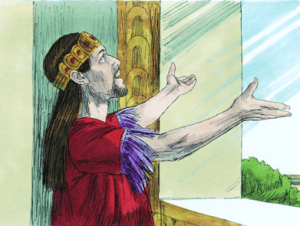
And the Lord heard that Josiah was penitent so he allowed him to be at peace.

When we follow after God, we are always at peace even in the midst of troubles and darkness. We can walk through the hardest of situations knowing that God is always with us.

We can hold fast to the fact that God will be with us.

Follow after God and waiver not from His path so you will be at peace.

Josiah’s Reign and Reform, part 1

Josiah was eight years old when he began to reign; he reigned thirty-one years in Jerusalem. His mother’s name was Jedidah daughter of Adaiah of Bozkath. He did what was right in the sight of the Lord, and walked in all the way of his father David; he did not turn aside to the right or to the left. In the eighteenth year of King Josiah, the king sent Shaphan son of Azaliah, son of Meshullam, the secretary, to the house of the Lord, saying, “Go up to the high priest Hilkiah, and have him count the entire sum of the money that has been brought into the house of the Lord, which the keepers of the threshold have collected from the people; let it be given into the hand of the workers who have the oversight of the house of the Lord; let them give it to the workers who are at the house of the Lord, repairing the house, that is, to the carpenters, to the builders, to the masons; and let them use it to buy timber and quarried stone to repair the house. But no accounting shall be asked from them for the money that is delivered into their hand, for they deal honestly.” The high priest Hilkiah said to Shaphan the secretary, “I have found the book of the law in the house of the Lord.” When Hilkiah gave the book to Shaphan, he read it. Then Shaphan the secretary came to the king, and reported to the king, “Your servants have emptied out the money that was found in the house, and have delivered it into the hand of the workers who have oversight of the house of the Lord.” Shaphan the secretary informed the king, “The priest Hilkiah has given me a book.” Shaphan then read it aloud to the king. When the king heard the words of the book of the law, he tore his clothes. Then the king commanded the priest Hilkiah, Ahikam son of Shaphan, Achbor son of Micaiah, Shaphan the secretary, and the king’s servant Asaiah, saying, “Go, inquire of the Lord for me, for the people, and for all Judah, concerning the words of this book that has been found; for great is the wrath of the Lord that is kindled against us, because our ancestors did not obey the words of this book, to do according to all that is written concerning us.” (2 Kings 22:1-13, NRSV)

Josiah tried to right the wrongs of the kings before him.

They cleaned out the temple of everything that had been taken and used it to repair the temple. And when they did this they found the book of the law.

Upon reading it they were reminded of all those before them had done against the Lord. and they were mourning because of the way their ancestors treated the Lord

How will those that follow us see we followed the Lord?

How do we follow the Lord?

Manasseh’s Wicked Reign

Manasseh was twelve years old when he began to reign; he reigned fifty-five years in Jerusalem. His mother’s name was Hephzibah. He did what was evil in the sight of the Lord, following the abominable practices of the nations that the Lord drove out before the people of Israel. For he rebuilt the high places that his father Hezekiah had destroyed; he erected altars for Baal, made a sacred pole, as King Ahab of Israel had done, worshiped all the host of heaven, and served them. He built altars in the house of the Lord, of which the Lord had said, “In Jerusalem I will put my name.” He built altars for all the host of heaven in the two courts of the house of the Lord. He made his son pass through fire; he practiced soothsaying and augury, and dealt with mediums and with wizards. He did much evil in the sight of the Lord, provoking him to anger. The carved image of Asherah that he had made he set in the house of which the Lord said to David and to his son Solomon, “In this house, and in Jerusalem, which I have chosen out of all the tribes of Israel, I will put my name forever; I will not cause the feet of Israel to wander any more out of the land that I gave to their ancestors, if only they will be careful to do according to all that I have commanded them, and according to all the law that my servant Moses commanded them.” But they did not listen; Manasseh misled them to do more evil than the nations had done that the Lord destroyed before the people of Israel. The Lord said by his servants the prophets, “Because King Manasseh of Judah has committed these abominations, has done things more wicked than all that the Amorites did, who were before him, and has caused Judah also to sin with his idols; therefore thus says the Lord, the God of Israel, I am bringing upon Jerusalem and Judah such evil that the ears of everyone who hears of it will tingle. I will stretch over Jerusalem the measuring line for Samaria, and the plummet for the house of Ahab; I will wipe Jerusalem as one wipes a dish, wiping it and turning it upside down.I will cast off the remnant of my heritage, and give them into the hand of their enemies; they shall become a prey and a spoil to all their enemies, because they have done what is evil in my sight and have provoked me to anger, since the day their ancestors came out of Egypt, even to this day.”Moreover Manasseh shed very much innocent blood, until he had filled Jerusalem from one end to another, besides the sin that he caused Judah to sin so that they did what was evil in the sight of the Lord. (2 Kings 21:1-16, NRSV)
Why did Manasseh do the things he did?

Was it because he was a great king and was looking out for the people he was ruling?

Probably not. More likely he was self-centered and looked out for the unholy trinity, me, myself and I. Manasseh looked out for himself and did what brought him pleasure and fed his needs.

So the question we can learn and ask from this passage is, where are my motives aligned?

Is my heart looking out for the other or myself?

Hezekiah is Saved from an Illness

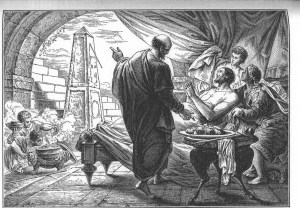
In those days Hezekiah became sick and was at the point of death. The prophet Isaiah son of Amoz came to him, and said to him, “Thus says the Lord: Set your house in order, for you shall die; you shall not recover.”Then Hezekiah turned his face to the wall, and prayed to the Lord: “Remember now, O Lord, I implore you, how I have walked before you in faithfulness with a whole heart, and have done what is good in your sight.” And Hezekiah wept bitterly. Then the word of the Lord came to Isaiah: “Go and say to Hezekiah, Thus says the Lord, the God of your ancestor David: I have heard your prayer, I have seen your tears; I will add fifteen years to your life. I will deliver you and this city out of the hand of the king of Assyria, and defend this city. “This is the sign to you from the Lord, that the Lord will do this thing that he has promised: See, I will make the shadow cast by the declining sun on the dial of Ahaz turn back ten steps.” So the sun turned back on the dial the ten steps by which it had declined. (Isaiah 38:1-8, NRSV)

Hezekiah was dying and Isaiah went to him to tell him that he would not recover. And Hezekiah wept and called upon the Lord. And because Hezekiah had followed after God and tried to do what was good int he eyes of God God heard him and had pity on him and gave him more time. Does this mean that if we ask God to extend our life He will?

Or if we do not follow after God He will strike us down quicker?

This means that God loves as we do and sees our hurts and our struggles and understands when we scream at Him.

God gets our emotions because our emotions come from God.

So ask, and seek. Follow after God all of your days, not because it might get you a second chance, but because it will allow you to share what He has given you so that others might come to know Him through you.

God’s Plan for Peace

In the fourteenth year of King Hezekiah, King Sennacherib of Assyria came up against all the fortified cities of Judah and captured them. The king of Assyria sent the Rabshakeh from Lachish to King Hezekiah at Jerusalem, with a great army. He stood by the conduit of the upper pool on the highway to the Fuller’s Field. And there came out to him Eliakim son of Hilkiah, who was in charge of the palace, and Shebna the secretary, and Joah son of Asaph, the recorder. Then the Rabshakeh stood and called out in a loud voice in the language of Judah, “Hear the words of the great king, the king of Assyria! Thus says the king: ‘Do not let Hezekiah deceive you, for he will not be able to deliver you. Do not let Hezekiah make you rely on the Lord by saying, The Lord will surely deliver us; this city will not be given into the hand of the king of Assyria.’Do not listen to Hezekiah; for thus says the king of Assyria: ‘Make your peace with me and come out to me; then everyone of you will eat from your own vine and your own fig tree and drink water from your own cistern, until I come and take you away to a land like your own land, a land of grain and wine, a land of bread and vineyards. Do not let Hezekiah mislead you by saying, The Lord will save us. Has any of the gods of the nations saved their land out of the hand of the king of Assyria? Where are the gods of Hamath and Arpad? Where are the gods of Sepharvaim? Have they delivered Samaria out of my hand? Who among all the gods of these countries have saved their countries out of my hand, that the Lord should save Jerusalem out of my hand?’” When King Hezekiah heard it, he tore his clothes, covered himself with sackcloth, and went into the house of the Lord. And he sent Eliakim, who was in charge of the palace, and Shebna the secretary, and the senior priests, covered with sackcloth, to the prophet Isaiah son of Amoz. They said to him, “Thus says Hezekiah, This day is a day of distress, of rebuke, and of disgrace; children have come to the birth, and there is no strength to bring them forth. It may be that the Lord your God heard the words of the Rabshakeh, whom his master the king of Assyria has sent to mock the living God, and will rebuke the words that the Lord your God has heard; therefore lift up your prayer for the remnant that is left.” When the servants of King Hezekiah came to Isaiah, Isaiah said to them, “Say to your master, ‘Thus says the Lord: Do not be afraid because of the words that you have heard, with which the servants of the king of Assyria have reviled me. I myself will put a spirit in him, so that he shall hear a rumor, and return to his own land; I will cause him to fall by the sword in his own land.’” The word that Isaiah son of Amoz saw concerning Judah and Jerusalem. In days to come the mountain of the Lord’s house shall be established as the highest of the mountains, and shall be raised above the hills; all the nations shall stream to it. Many peoples shall come and say, “Come, let us go up to the mountain of the Lord, to the house of the God of Jacob; that he may teach us his ways and that we may walk in his paths.” For out of Zion shall go forth instruction, and the word of the Lord from Jerusalem. He shall judge between the nations, and shall arbitrate for many peoples; they shall beat their swords into plowshares, and their spears into pruning hooks; nation shall not lift up sword against nation, neither shall they learn war any more. (Isaiah 36:1-3, 13-20; 37:1-7; 2:1-4, NRSV)

In the days coming the House of the Lord will be the highest mountain and all of the world will stream to the mountain, saying, let us go up to the house of the Lord. And they will beat swords into plowshares and spears into pruning hooks. Because the world will be at peace and be united under God.

Are you ready for peace and for the world and all people to work together?

What can you do to help bring this to be?

Isaiah’s Call

In the year that King Uzziah died, I saw the Lord sitting on a throne, high and lofty; and the hem of his robe filled the temple. Seraphs were in attendance above him; each had six wings: with two they covered their faces, and with two they covered their feet, and with two they flew. And one called to another and said: “Holy, holy, holy is the Lord of hosts; the whole earth is full of his glory.” The pivots on the thresholds shook at the voices of those who called, and the house filled with smoke. And I said: “Woe is me! I am lost, for I am a man of unclean lips, and I live among a people of unclean lips; yet my eyes have seen the King, the Lord of hosts!” Then one of the seraphs flew to me, holding a live coal that had been taken from the altar with a pair of tongs. The seraph touched my mouth with it and said: “Now that this has touched your lips, your guilt has departed and your sin is blotted out.” Then I heard the voice of the Lord saying, “Whom shall I send, and who will go for us?” And I said, “Here am I; send me!” And he said, “Go and say to this people: ‘Keep listening, but do not comprehend; keep looking, but do not understand.’ Make the mind of this people dull, and stop their ears, and shut their eyes, so that they may not look with their eyes, and listen with their ears, and comprehend with their minds, and turn and be healed.” Then I said, “How long, O Lord?” And he said: “Until cities lie waste without inhabitant, and houses without people, and the land is utterly desolate; until the Lord sends everyone far away, and vast is the emptiness in the midst of the land. Even if a tenth part remain in it, it will be burned again, like a terebinth or an oak whose stump remains standing when it is felled.” The holy seed is its stump. (Isaiah 6:1-13, NRSV)

I love this story, but usually, it ends at verse 8, “Here am I; send me!” We all want to follow where God is leading us or sending us and we emphatically say yes, and then God says what we have to do. And usually again we start to backpedal.

Isaiah was sent to the people to tell them to listen but not hear, to keep looking but not comprehend what they see. They would not get it. Until the place was completely destroyed. Not what we want to do. We want to go and help people see love, but sometimes we have to tell those who can not hear what they need to hear and know that it will not make a difference, but that is what God called us to.

So let us all follow God and know that sometimes it will not be the cushy assignment but it is what we need to do.

So are you ready to say, “Here am I, Send me!”