Israel Arrives at Sinai

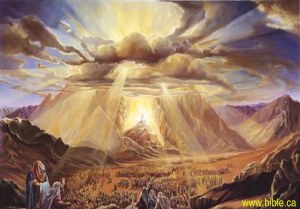
On the third new moon after the Israelites had gone out of the land of Egypt, on that very day, they came into the wilderness of Sinai. They had journeyed from Rephidim, entered the wilderness of Sinai, and camped in the wilderness; Israel camped there in front of the mountain. Then Moses went up to God; the Lord called to him from the mountain, saying, “Thus you shall say to the house of Jacob, and tell the Israelites: You have seen what I did to the Egyptians, and how I bore you on eagles’ wings and brought you to myself. Now therefore, if you obey my voice and keep my covenant, you shall be my treasured possession out of all the peoples. Indeed, the whole earth is mine, but you shall be for me a priestly kingdom and a holy nation. These are the words that you shall speak to the Israelites.” So Moses came, summoned the elders of the people, and set before them all these words that the Lord had commanded him. The people all answered as one: “Everything that the Lord has spoken we will do.” Moses reported the words of the people to the Lord. Then the Lord said to Moses, “I am going to come to you in a dense cloud, in order that the people may hear when I speak with you and so trust you ever after.” When Moses had told the words of the people to the Lord, the Lord said to Moses: “Go to the people and consecrate them today and tomorrow. Have them wash their clothes and prepare for the third day, because on the third day the Lord will come down upon Mount Sinai in the sight of all the people. You shall set limits for the people all around, saying, ‘Be careful not to go up the mountain or to touch the edge of it. Any who touch the mountain shall be put to death. No hand shall touch them, but they shall be stoned or shot with arrows; whether animal or human being, they shall not live.’ When the trumpet sounds a long blast, they may go up on the mountain.” So Moses went down from the mountain to the people. He consecrated the people, and they washed their clothes. And he said to the people, “Prepare for the third day; do not go near a woman.” On the morning of the third day there was thunder and lightning, as well as a thick cloud on the mountain, and a blast of a trumpet so loud that all the people who were in the camp trembled. Moses brought the people out of the camp to meet God. They took their stand at the foot of the mountain. Now Mount Sinai was wrapped in smoke, because the Lord had descended upon it in fire; the smoke went up like the smoke of a kiln, while the whole mountain shook violently. As the blast of the trumpet grew louder and louder, Moses would speak and God would answer him in thunder. When the Lord descended upon Mount Sinai, to the top of the mountain, the Lord summoned Moses to the top of the mountain, and Moses went up. Then the Lord said to Moses, “Go down and warn the people not to break through to the Lord to look; otherwise many of them will perish. Even the priests who approach the Lord must consecrate themselves or the Lord will break out against them.” Moses said to the Lord, “The people are not permitted to come up to Mount Sinai; for you yourself warned us, saying, ‘Set limits around the mountain and keep it holy.’“ The Lord said to him, “Go down, and come up bringing Aaron with you; but do not let either the priests or the people break through to come up to the Lord; otherwise he will break out against them.” So Moses went down to the people and told them. (Exodus 19:1-25, NRSV)

The Israelites arrived at Mount Sinai and Moses went up the mountain to be with God.

No one could touch the mountain or they would die. God is so holy we cannot be near Him or look upon Him without dying. So God set up some guidelines for helping the people stay ok. But the people were still wanting to come through so God sent Moses down to warn them.

Isn’t that how we all are? We want things the way we want them. So we only follow when it meets our needs. How do we not listen to God to go after what we think we want?
Amalek Is Defeated

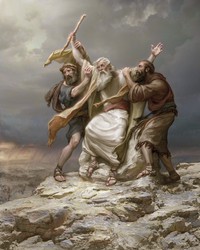
Then Amalek came and fought with Israel at Rephidim. Moses said to Joshua, “Choose some men for us and go out, fight with Amalek. Tomorrow I will stand on the top of the hill with the staff of God in my hand.” So Joshua did as Moses told him, and fought with Amalek, while Moses, Aaron, and Hur went up to the top of the hill. Whenever Moses held up his hand, Israel prevailed; and whenever he lowered his hand, Amalek prevailed. But Moses’ hands grew weary; so they took a stone and put it under him, and he sat on it. Aaron and Hur held up his hands, one on one side, and the other on the other side; so his hands were steady until the sun set. And Joshua defeated Amalek and his people with the sword. Then the Lord said to Moses, “Write this as a reminder in a book and recite it in the hearing of Joshua: I will utterly blot out the remembrance of Amalek from under heaven.” And Moses built an altar and called it, The Lord is my banner. He said, “A hand upon the banner of the Lord! The Lord will have war with Amalek from generation to generation.” (Exodus 17:8-16, NRSV)
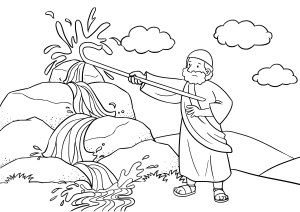
Imagine if they only way that things went well for your people was if you held your arms up in the air. How long would you be able to do this?

Moses had to hold his arms up so Amalek was defeated. But he couldn’t do it. so Aaron and Hur got him a rock to balance on and they each held one of Moses’ arms.

This is community. We are not expected to do it on our own, but we have others to help hold us up. We are here to hold each other and help and to be held and to be helped.

Who have you helped?

Water from the Rock

From the wilderness of Sin the whole congregation of the Israelites journeyed by stages, as the Lord commanded. They camped at Rephidim, but there was no water for the people to drink. The people quarreled with Moses, and said, “Give us water to drink.” Moses said to them, “Why do you quarrel with me? Why do you test the Lord?” But the people thirsted there for water; and the people complained against Moses and said, “Why did you bring us out of Egypt, to kill us and our children and livestock with thirst?” So Moses cried out to the Lord, “What shall I do with this people? They are almost ready to stone me.” The Lord said to Moses, “Go on ahead of the people, and take some of the elders of Israel with you; take in your hand the staff with which you struck the Nile, and go. I will be standing there in front of you on the rock at Horeb. Strike the rock, and water will come out of it, so that the people may drink.” Moses did so, in the sight of the elders of Israel. He called the place Massah and Meribah, because the Israelites quarreled and tested the Lord, saying, “Is the Lord among us or not?” (Exodus 17:1-7, NRSV)
Water and food are things we all need. And we look to our leader to provide those things but is it really our leader’s job to do this?

God will provide things for us, but sometimes God works through us and others to provide.

So what can you provide for others that is God working through you?

More Provision: Manna and Quail

The whole congregation of the Israelites set out from Elim; and Israel came to the wilderness of Sin, which is between Elim and Sinai, on the fifteenth day of the second month after they had departed from the land of Egypt. The whole congregation of the Israelites complained against Moses and Aaron in the wilderness. The Israelites said to them, “If only we had died by the hand of the Lord in the land of Egypt, when we sat by the fleshpots and ate our fill of bread; for you have brought us out into this wilderness to kill this whole assembly with hunger.” Then the Lord said to Moses, “I am going to rain bread from heaven for you, and each day the people shall go out and gather enough for that day. In that way I will test them, whether they will follow my instruction or not. On the sixth day, when they prepare what they bring in, it will be twice as much as they gather on other days.” So Moses and Aaron said to all the Israelites, “In the evening you shall know that it was the Lord who brought you out of the land of Egypt, and in the morning you shall see the glory of the Lord, because he has heard your complaining against the Lord. For what are we, that you complain against us?” And Moses said, “When the Lord gives you meat to eat in the evening and your fill of bread in the morning, because the Lord has heard the complaining that you utter against him—what are we? Your complaining is not against us but” against the Lord. Then Moses said to Aaron, “Say to the whole congregation of the Israelites, ‘Draw near to the Lord, for he has heard your complaining.’“And as Aaron spoke to the whole congregation of the Israelites, they looked toward the wilderness, and the glory of the Lord appeared in the cloud. The Lord spoke to Moses and said, “I have heard the complaining of the Israelites; say to them, ‘At twilight you shall eat meat, and in the morning you shall have your fill of bread; then you shall know that I am the Lord your God.’“ In the evening quails came up and covered the camp; and in the morning there was a layer of dew around the camp. When the layer of dew lifted, there on the surface of the wilderness was a fine flaky substance, as fine as frost on the ground. When the Israelites saw it, they said to one another, “What is it?” For they did not know what it was. Moses said to them, “It is the bread that the Lord has given you to eat. This is what the Lord has commanded: ‘Gather as much of it as each of you needs, an omer to a person according to the number of persons, all providing for those in their own tents.’“ (Exodus 16:1-16, NRSV)
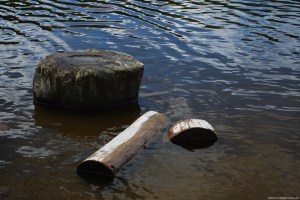
So the Israelites had been going for about 45 days without food. And they start complaining. Obviously, they didn’t learn from the water at Mara or the sea that God would provide for them if they only but ask.

So Moses called out to God and God provided Manna and quails. Bread and meat for all the people. God will provide if we only trust Him to provide for us.

Do you believe God will provide for you?


God Provides in the Wilderness

Then Moses ordered Israel to set out from the Red Sea, and they went into the wilderness of Shur. They went three days in the wilderness and found no water. When they came to Marah, they could not drink the water of Marah because it was bitter. That is why it was called Marah. And the people complained against Moses, saying, “What shall we drink?” He cried out to the Lord; and the Lord showed him a piece of wood; he threw it into the water, and the water became sweet. There the Lord made for them a statute and an ordinance and there he put them to the test. He said, “If you will listen carefully to the voice of the Lord your God, and do what is right in his sight, and give heed to his commandments and keep all his statutes, I will not bring upon you any of the diseases that I brought upon the Egyptians; for I am the Lord who heals you.” Then they came to Elim, where there were twelve springs of water and seventy palm trees; and they camped there by the water. (Exodus 15:22-27, NRSV)
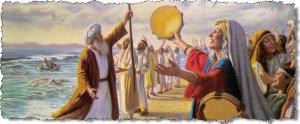
So after they crossed the water they wandered for 3 days without food or water. And then when they found water it was bitter so they couldn’t drink it. Have you ever drank something that was bitter? And you just couldn’t do it. Even given the fact that they have walked for 3 days without water, they still could not drink it. So they complained. And Moses called out to God and God said, “put this piece of wood in the water.” And the water became sweet.

So they drank and got their fill. So Moses told the people if they listen to God and heed his commandments and keep all of his statutes God will heal them.

Ok, so which commandments and statutes had God given at this point? They had not yet made it to Sinai. So the commandments hadn’t been given yet…

What commandments and statutes are we supposed to keep?

Is it really about the 10 commandments?

Moses’ Song

Then Moses and the Israelites sang this song to the Lord: “I will sing to the Lord, for he has triumphed gloriously; horse and rider he has thrown into the sea. The Lord is my strength and my might, and he has become my salvation; this is my God, and I will praise him, my father’s God, and I will exalt him. The Lord is a warrior; the Lord is his name. “Pharaoh’s chariots and his army he cast into the sea; his picked officers were sunk in the Red Sea. The floods covered them; they went down into the depths like a stone. Your right hand, O Lord, glorious in power— your right hand, O Lord, shattered the enemy. In the greatness of your majesty you overthrew your adversaries; you sent out your fury, it consumed them like stubble. At the blast of your nostrils the waters piled up, the floods stood up in a heap; the deeps congealed in the heart of the sea. The enemy said, ‘I will pursue, I will overtake, I will divide the spoil, my desire shall have its fill of them. I will draw my sword, my hand shall destroy them.’ You blew with your wind, the sea covered them; they sank like lead in the mighty waters. (Exodus 15:1-10, NRSV)

Have you ever been so happy that you just burst into song? Or maybe felt like you wanted to?

Moses and the Israelites are beyond joy-filled at being ushered by God across the sea into safety from the army of Pharoh.

Moses just starts to sing about the wonderful feats of God and how God saved them.

Have you ever given spontaneous praise to God?

Semper Reformanda

On October 31, 1517 Martin Luther nailed his 95 Thesis to the door of Wittenberg Church.
It was the beginning of the Reformation.

The change of the understanding of who we are as the body of Christ. Martin Luther did not want to start a new denomination, or break away from the church catholic. He wanted to reform areas he knew were not aligned with the Holy Scripture in practices of Dogma in the church. He wanted to change the practices to match what was said in the Bible. Radical!

And is this a bad thing? To be in line with the Bible? How many things do we do today that are not inline with the Holy Scripture?

Ecclesia semper reformanda est is a Latin phrase first used by Karl Barth in 1947 and it means “the church is always to be reformed.” Barth derived this from a saying of St. Augustine an early church father. It means that the church must always reexamine itself, in order to maintain purity in doctrine and in practice.

A variation by Barth on his own phrase is Ecclesia reformata semper reformanda. This means “the reformed church (is) always to be reformed”. Meaning our need for change or evaluation is never down.

We need to not be complacent in the way we do things, but always evaluating the best practice. We must be willing to follow Christ where He is leading us, regardless of where we have been, or if we see we need to do thing differently.

So in this month of October, be ready to look where we have been, where we are, and where we are going. Ready to move and to do as Christ leads us always ready to reform!

And remember change isn’t bad or good it is merely different. And that maybe were God is calling us to be.

Parting of the Red Sea

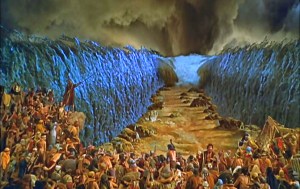
When the king of Egypt was told that the people had fled, the minds of Pharaoh and his officials were changed toward the people, and they said, “What have we done, letting Israel leave our service?” So he had his chariot made ready, and took his army with him; he took six hundred picked chariots and all the other chariots of Egypt with officers over all of them. As Pharaoh drew near, the Israelites looked back, and there were the Egyptians advancing on them. In great fear the Israelites cried out to the Lord. They said to Moses, “Was it because there were no graves in Egypt that you have taken us away to die in the wilderness? What have you done to us, bringing us out of Egypt? Is this not the very thing we told you in Egypt, ‘Let us alone and let us serve the Egyptians’? For it would have been better for us to serve the Egyptians than to die in the wilderness.” But Moses said to the people, “Do not be afraid, stand firm, and see the deliverance that the Lord will accomplish for you today; for the Egyptians whom you see today you shall never see again. The Lord will fight for you, and you have only to keep still.” Then Moses stretched out his hand over the sea. The Lord drove the sea back by a strong east wind all night, and turned the sea into dry land; and the waters were divided. The Israelites went into the sea on dry ground, the waters forming a wall for them on their right and on their left. The Egyptians pursued, and went into the sea after them, all of Pharaoh’s horses, chariots, and chariot drivers. At the morning watch the Lord in the pillar of fire and cloud looked down upon the Egyptian army, and threw the Egyptian army into panic. He clogged their chariot wheels so that they turned with difficulty. The Egyptians said, “Let us flee from the Israelites, for the Lord is fighting for them against Egypt.” Then the Lord said to Moses, “Stretch out your hand over the sea, so that the water may come back upon the Egyptians, upon their chariots and chariot drivers.” So Moses stretched out his hand over the sea, and at dawn the sea returned to its normal depth. As the Egyptians fled before it, the Lord tossed the Egyptians into the sea. The waters returned and covered the chariots and the chariot drivers, the entire army of Pharaoh that had followed them into the sea; not one of them remained. But the Israelites walked on dry ground through the sea, the waters forming a wall for them on their right and on their left. (Exodus 14:5-7, 10-14, 21-29, NRSV)
This is an interesting story. Most of us have seen the movie, so we think of the image above of the water pushing back and becoming walls, because that is what the text says.

But what happened really and why is this story important to us as followers of Christ?

Well, the story tells us that Pharoh after the plaques let the Israelites go and after that, he thought, “What have I done, now we have no one to do our work.” So they went after the Israelites. And the Israelites were then trapped between a body of water and the approaching Egyptian army. And the Israelites whined to God and to Moses about graves in Egypt and having to die in the wilderness. But God heard them and told Moses to lift his staff and the waters would divide.

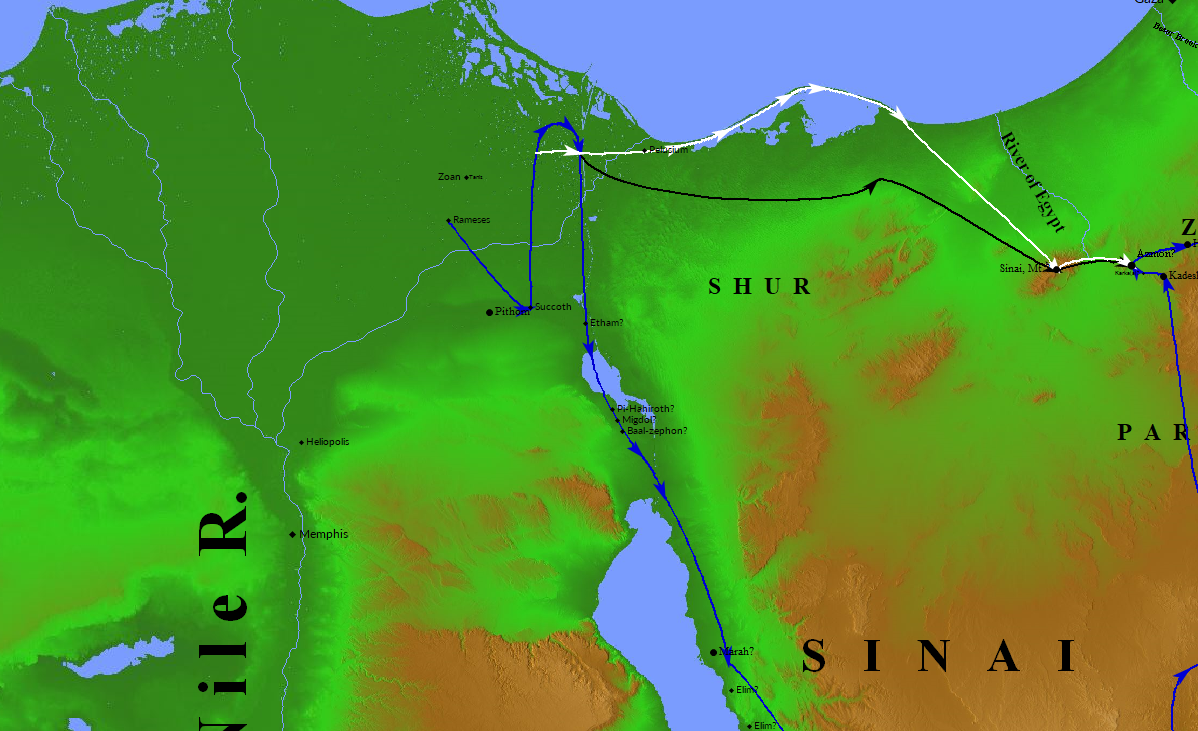
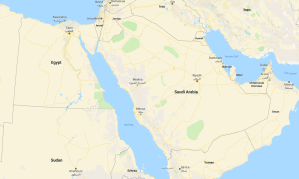
Now, how big was this body of water? The text says the red sea. Which is here:

But is that actually where the Israelites crossed? And where on the Red Sea?

What if I told you that most scholars don’t think it was the Red Sea, but a different body of water? I remember in my class on this in seminary our professor telling us the Hebrew is Sea of Reeds. So it probably isn’t the Red Sea. And my bible software shows the route of the exodus going through what is now know as Great Bitters Lake.

And Great Bitters Lake is right here.

Or here is a picture of where it is located:

So why didn’t the Israelites go around the lake? Well, they were fleeing for their lives at this point because this huge army was coming up behind them, and they saw water in front of them, maybe for as far as they could see. So they panicked, as we often do.

And to get back to the question of why this is an important story for followers of Christ, beyond that it is part of the story that leads us to Jesus coming, it shows that God is always faithful. God led His people out of Egypt not to their death but to a land flowing with milk and honey. God upholds His promises and is faithful to His people.

Have faith that God will part the waters and help you walk on dry land. Even when it looks like all hope is lost, God will never leave you.

“Let My People Go”

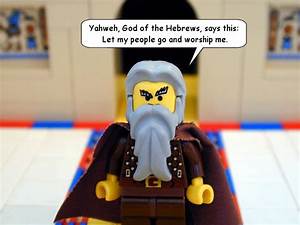
Afterward Moses and Aaron went to Pharaoh and said, “Thus says the Lord, the God of Israel, ‘Let my people go, so that they may celebrate a festival to me in the wilderness.’“ But Pharaoh said, “Who is the Lord, that I should heed him and let Israel go? I do not know the Lord, and I will not let Israel go.” Then they said, “The God of the Hebrews has revealed himself to us; let us go a three days’ journey into the wilderness to sacrifice to the Lord our God, or he will fall upon us with pestilence or sword.” But the king of Egypt said to them, “Moses and Aaron, why are you taking the people away from their work? Get to your labors!” Pharaoh continued, “Now they are more numerous than the people of the land and yet you want them to stop working!” That same day Pharaoh commanded the taskmasters of the people, as well as their supervisors, “You shall no longer give the people straw to make bricks, as before; let them go and gather straw for themselves. But you shall require of them the same quantity of bricks as they have made previously; do not diminish it, for they are lazy; that is why they cry, ‘Let us go and offer sacrifice to our God.’ Let heavier work be laid on them; then they will labor at it and pay no attention to deceptive words.” (Exodus 5:1-9, NRSV)
It seems like God’s plan didn’t work so well. Moses and Aaron went to Pharoh and told him that God said, “Let my people go.” And Pharoh said no and take away their straw. Make them get their own straw now for the bricks they make and oh yea the brick quota does not decrease.

So now they Israelites are worked harder, not able to worship God.

Have you ever been in a situation like this where you thought that things were going to turn around and they got worse?

I wonder if Moses and Aaron really thought that Pharoh was going to let the Israelites go.

Do you wonder about how things are going to work? And does that actually help the situation?

Words of Liberation from the Bush

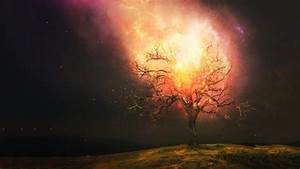
Moses was keeping the flock of his father-in-law Jethro, the priest of Midian; he led his flock beyond the wilderness, and came to Horeb, the mountain of God. There the angel of the Lord appeared to him in a flame of fire out of a bush; he looked, and the bush was blazing, yet it was not consumed. Then Moses said, “I must turn aside and look at this great sight, and see why the bush is not burned up.” When the Lord saw that he had turned aside to see, God called to him out of the bush, “Moses, Moses!” And he said, “Here I am.” Then he said, “Come no closer! Remove the sandals from your feet, for the place on which you are standing is holy ground.” He said further, “I am the God of your father, the God of Abraham, the God of Isaac, and the God of Jacob.” And Moses hid his face, for he was afraid to look at God. Then the Lord said, “I have observed the misery of my people who are in Egypt; I have heard their cry on account of their taskmasters. Indeed, I know their sufferings, and I have come down to deliver them from the Egyptians, and to bring them up out of that land to a good and broad land, a land flowing with milk and honey, to the country of the Canaanites, the Hittites, the Amorites, the Perizzites, the Hivites, and the Jebusites. The cry of the Israelites has now come to me; I have also seen how the Egyptians oppress them. So come, I will send you to Pharaoh to bring my people, the Israelites, out of Egypt.” But Moses said to God, “Who am I that I should go to Pharaoh, and bring the Israelites out of Egypt?” He said, “I will be with you; and this shall be the sign for you that it is I who sent you: when you have brought the people out of Egypt, you shall worship God on this mountain.” But Moses said to God, “If I come to the Israelites and say to them, ‘The God of your ancestors has sent me to you,’ and they ask me, ‘What is his name?’ what shall I say to them?” God said to Moses, “I AM WHO I AM.” He said further, “Thus you shall say to the Israelites, ‘I AM has sent me to you.’“God also said to Moses, “Thus you shall say to the Israelites, ‘The Lord, the God of your ancestors, the God of Abraham, the God of Isaac, and the God of Jacob, has sent me to you’: This is my name forever, and this my title for all generations. Go and assemble the elders of Israel, and say to them, ‘The Lord, the God of your ancestors, the God of Abraham, of Isaac, and of Jacob, has appeared to me, saying: I have given heed to you and to what has been done to you in Egypt. I declare that I will bring you up out of the misery of Egypt, to the land of the Canaanites, the Hittites, the Amorites, the Perizzites, the Hivites, and the Jebusites, a land flowing with milk and honey.’ (Exodus 3:1-17, NRSV)

What would you do if you saw a bush on fire and it was not actually burning?

And then if that isn’t enough, a voice comes out of the bush, and it is God and God is telling you to go back to a place you fled from because of something terrible you did there.

And God is telling you to go and do something you really don’t want to do and you think you are not capable of doing.

What would you do?

I believe God does speak to us today just like this. And we are so busy or so annoyed or so insert action word here that we miss it. We miss God trying to tell us something.

All of us have our burning bush. What is yours?

And the real question is will you go?