 Now in the church at Antioch there were prophets and teachers: Barnabas, Simeon who was called Niger, Lucius of Cyrene, Manaen a member of the court of Herod the ruler, and Saul. 2While they were worshipping the Lord and fasting, the Holy Spirit said, ‘Set apart for me Barnabas and Saul for the work to which I have called them.’ 3Then after fasting and praying they laid their hands on them and sent them off. 8 In Lystra there was a man sitting who could not use his feet and had never walked, for he had been crippled from birth. 9He listened to Paul as he was speaking. And Paul, looking at him intently and seeing that he had faith to be healed, 10said in a loud voice, ‘Stand upright on your feet.’ And the man sprang up and began to walk. 11When the crowds saw what Paul had done, they shouted in the Lycaonian language, ‘The gods have come down to us in human form!’ 12Barnabas they called Zeus, and Paul they called Hermes, because he was the chief speaker. 13The priest of Zeus, whose temple was just outside the city, brought oxen and garlands to the gates; he and the crowds wanted to offer sacrifice. 14When the apostles Barnabas and Paul heard of it, they tore their clothes and rushed out into the crowd, shouting, 15‘Friends, why are you doing this? We are mortals just like you, and we bring you good news, that you should turn from these worthless things to the living God, who made the heaven and the earth and the sea and all that is in them. 16In past generations he allowed all the nations to follow their own ways; 17yet he has not left himself without a witness in doing good—giving you rains from heaven and fruitful seasons, and filling you with food and your hearts with joy.’18Even with these words, they scarcely restrained the crowds from offering sacrifice to them. (Acts 13:1-3; 14:8-18, NRSV)
Saul and Barnabas are sent out to spread the word of God. They were called to be set apart, as all of us were. And like Jesus, Saul had the ability to see into a soul and see them as God did. This man sitting who was crippled from birth, Saul looked at him and could see his faith.
Have you ever looked at someone and felt what they were feeling?
Have you ever been so connected to another soul that you could feel their hurt?
That you could feel their need for freedom?
A wise man told me this is when we enter the space between. You see if we look at our lives as circles, where your life and another’s life intersects is the space between you. You can enter that and possibly feel what the other does.
Saul was there with the crippled man and he knew that he was ready and filled with faith to be healed.
We can and are called to enter that space so that we might share the love of God. Most of us will never enter this space because we have to allow our lives to be on display so they other might enter with us.
But I believe we are all called to go there. To be in the space between. Because God made us to be in communion with God and all of creation and to live our lives to show His love.
Are you ready to enter the space between?
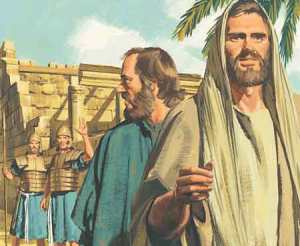 35When morning came, the magistrates sent the police, saying, ‘Let those men go.’ 36And the jailer reported the message to Paul, saying, ‘The magistrates sent word to let you go; therefore come out now and go in peace.’ 37But Paul replied, ‘They have beaten us in public, uncondemned, men who are Roman citizens, and have thrown us into prison; and now are they going to discharge us in secret? Certainly not! Let them come and take us out themselves.’ 38The police reported these words to the magistrates, and they were afraid when they heard that they were Roman citizens; 39so they came and apologized to them. And they took them out and asked them to leave the city. 40After leaving the prison they went to Lydia’s home; and when they had seen and encouraged the brothers and sisters there, they departed. (Acts 16:35-40, NRSV)
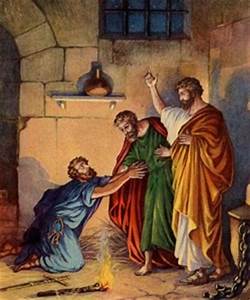 25 About midnight Paul and Silas were praying and singing hymns to God, and the prisoners were listening to them. 26Suddenly there was an earthquake, so violent that the foundations of the prison were shaken; and immediately all the doors were opened and everyone’s chains were unfastened. 27When the jailer woke up and saw the prison doors wide open, he drew his sword and was about to kill himself, since he supposed that the prisoners had escaped. 28But Paul shouted in a loud voice, ‘Do not harm yourself, for we are all here.’ 29The jailer called for lights, and rushing in, he fell down trembling before Paul and Silas. 30Then he brought them outside and said, ‘Sirs, what must I do to be saved?’31They answered, ‘Believe on the Lord Jesus, and you will be saved, you and your household.’ 32They spoke the word of the Lord to him and to all who were in his house. 33At the same hour of the night he took them and washed their wounds; then he and his entire family were baptized without delay. 34He brought them up into the house and set food before them; and he and his entire household rejoiced that he had become a believer in God. (Acts 16:25-34, NRSV)
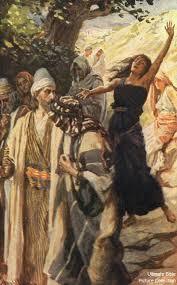 16 One day, as we were going to the place of prayer, we met a slave-girl who had a spirit of divination and brought her owners a great deal of money by fortune-telling. 17While she followed Paul and us, she would cry out, ‘These men are slaves of the Most High God, who proclaim to you a way of salvation.’ 18She kept doing this for many days. But Paul, very much annoyed, turned and said to the spirit, ‘I order you in the name of Jesus Christ to come out of her.’ And it came out that very hour. 19 But when her owners saw that their hope of making money was gone, they seized Paul and Silas and dragged them into the market-place before the authorities. 20When they had brought them before the magistrates, they said, ‘These men are disturbing our city; they are Jews 21and are advocating customs that are not lawful for us as Romans to adopt or observe.’ 22The crowd joined in attacking them, and the magistrates had them stripped of their clothing and ordered them to be beaten with rods.23After they had given them a severe flogging, they threw them into prison and ordered the jailer to keep them securely. 24Following these instructions, he put them in the innermost cell and fastened their feet in the stocks. (Acts 16:16-24, NRSV)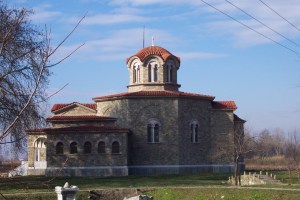
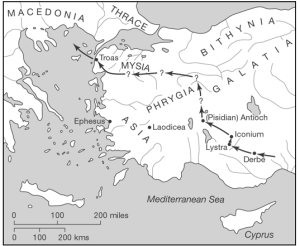 Paul went on also to Derbe and to Lystra, where there was a disciple named Timothy, the son of a Jewish woman who was a believer; but his father was a Greek. 2He was well spoken of by the believers in Lystra and Iconium. 3Paul wanted Timothy to accompany him; and he took him and had him circumcised because of the Jews who were in those places, for they all knew that his father was a Greek. 4As they went from town to town, they delivered to them for observance the decisions that had been reached by the apostles and elders who were in Jerusalem. 5So the churches were strengthened in the faith and increased in numbers daily. 6 They went through the region of Phrygia and Galatia, having been forbidden by the Holy Spirit to speak the word in Asia. 7When they had come opposite Mysia, they attempted to go into Bithynia, but the Spirit of Jesus did not allow them; 8so, passing by Mysia, they went down to Troas. 9During the night Paul had a vision: there stood a man of Macedonia pleading with him and saying, ‘Come over to Macedonia and help us.’ 10When he had seen the vision, we immediately tried to cross over to Macedonia, being convinced that God had called us to proclaim the good news to them. (Acts 16:1-10, NRSV)
 36 After some days Paul said to Barnabas, ‘Come, let us return and visit the believers in every city where we proclaimed the word of the Lord and see how they are doing.’ 37Barnabas wanted to take with them John called Mark. 38But Paul decided not to take with them one who had deserted them in Pamphylia and had not accompanied them in the work.39The disagreement became so sharp that they parted company; Barnabas took Mark with him and sailed away to Cyprus. 40But Paul chose Silas and set out, the believers commending him to the grace of the Lord.41He went through Syria and Cilicia, strengthening the churches. (Acts 15:36-41, NRSV)
 1 Praise the
 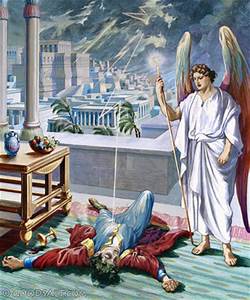 20 Now Herod was angry with the people of Tyre and Sidon. So they came to him in a body; and after winning over Blastus, the king’s chamberlain, they asked for a reconciliation, because their country depended on the king’s country for food. 21On an appointed day Herod put on his royal robes, took his seat on the platform, and delivered a public address to them. 22The people kept shouting, ‘The voice of a god, and not of a mortal!’ 23And immediately, because he had not given the glory to God, an angel of the Lord struck him down, and he was eaten by worms and died. 24 But the word of God continued to advance and gain adherents. 25Then after completing their mission Barnabas and Saul returned to Jerusalem and brought with them John, whose other name was Mark. (Acts 12:20-25, NRSV)
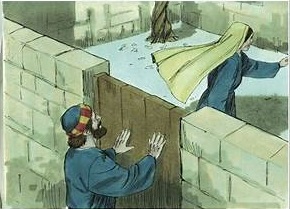 12 As soon as he realized this, he went to the house of Mary, the mother of John whose other name was Mark, where many had gathered and were praying. 13When he knocked at the outer gate, a maid named Rhoda came to answer. 14On recognizing Peter’s voice, she was so overjoyed that, instead of opening the gate, she ran in and announced that Peter was standing at the gate. 15They said to her, ‘You are out of your mind!’ But she insisted that it was so. They said, ‘It is his angel.’ 16Meanwhile, Peter continued knocking; and when they opened the gate, they saw him and were amazed. 17He motioned to them with his hand to be silent, and described for them how the Lord had brought him out of the prison. And he added, ‘Tell this to James and to the believers.’ Then he left and went to another place. 18 When morning came, there was no small commotion among the soldiers over what had become of Peter. 19When Herod had searched for him and could not find him, he examined the guards and ordered them to be put to death. Then he went down from Judea to Caesarea and stayed there. (Acts 12:12-19, NRSV)
