 I will stand at my watchpost, and station myself on the rampart; I will keep watch to see what he will say to me, and what he will answer concerning my complaint. Then the Lord answered me and said: Write the vision; make it plain on tablets, so that a runner may read it. For there is still a vision for the appointed time; it speaks of the end, and does not lie. If it seems to tarry, wait for it; it will surely come, it will not delay. Look at the proud! Their spirit is not right in them, but the righteous live by their faith. Moreover, wealth is treacherous; the arrogant do not endure. They open their throats wide as Sheol; like Death they never have enough. They gather all nations for themselves, and collect all peoples as their own.Shall not everyone taunt such people and, with mocking riddles, say about them, “Alas for you who heap up what is not your own!” How long will you load yourselves with goods taken in pledge? Will not your own creditors suddenly rise, and those who make you tremble wake up? Then you will be booty for them. Because you have plundered many nations, all that survive of the peoples shall plunder you— because of human bloodshed, and violence to the earth, to cities and all who live in them.“Alas for you who get evil gain for your houses, setting your nest on high to be safe from the reach of harm!” You have devised shame for your house by cutting off many peoples; you have forfeited your life. The very stones will cry out from the wall, and the plaster will respond from the woodwork. “Alas for you who build a town by bloodshed, and found a city on iniquity!” Is it not from the Lord of hosts that peoples labor only to feed the flames, and nations weary themselves for nothing? But the earth will be filled with the knowledge of the glory of the Lord, as the waters cover the sea. (Habakkuk 2:1-14, NRSV)
Have you ever watched someone stand guard?
They are watching to see something happen that shouldn’t be happening. Or to observe something that could happen.
What are you watching for?
What are you waiting for?
Do we tremble if we step off the path God has given us? Do we watch with expectation where God is leading us next?
How can we watch for what God is doing and join God there?
Are you ready to watch and wait on the Lord?
 The oracle that the prophet Habakkuk saw. O
 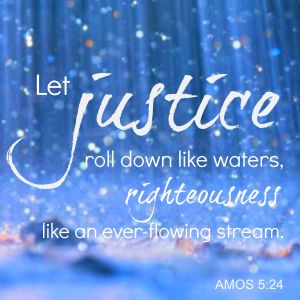 Seek good and not evil, that you may live; and so the
  For thus says the
  Thus says the
 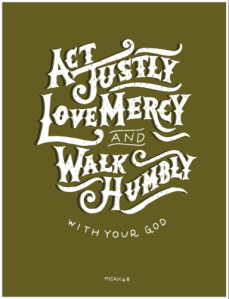 [ For lo, the
  On that day the root of Jesse shall stand as a signal to the peoples; the nations shall inquire of him, and his dwelling shall be glorious. On that day the Lord will extend his hand yet a second time to recover the remnant that is left of his people, from Assyria, from Egypt, from Pathros, from Ethiopia, from Elam, from Shinar, from Hamath, and from the coastlands of the sea. He will raise a signal for the nations, and will assemble the outcasts of Israel, and gather the dispersed of Judah from the four corners of the earth. The jealousy of Ephraim shall depart, the hostility of Judah shall be cut off; Ephraim shall not be jealous of Judah, and Judah shall not be hostile towards Ephraim. But they shall swoop down on the backs of the Philistines in the west, together they shall plunder the people of the east. They shall put forth their hand against Edom and Moab, and the Ammonites shall obey them. And the
  A shoot shall come out from the stump of Jesse, and a branch shall grow out of his roots. The spirit of the
 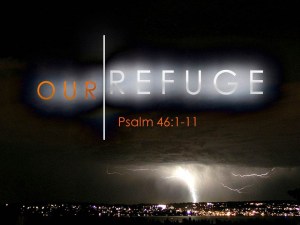 God is our refuge and strength, a very present help in trouble.
 In the days of Ahaz son of Jotham son of Uzziah, king of Judah, King Rezin of Aram and King Pekah son of Remaliah of Israel went up to attack Jerusalem, but could not mount an attack against it. When the house of David heard that Aram had allied itself with Ephraim, the heart of Ahaz and the heart of his people shook as the trees of the forest shake before the wind. Then the
  aSacredRebel