
Life
 Lord, you have been our dwelling place in all generations. Before the mountains were brought forth, or ever you had formed the earth and the world, from everlasting to everlasting you are God. You turn us back to dust, and say, “Turn back, you mortals.” For a thousand years in your sight are like yesterday when it is past, or like a watch in the night. You sweep them away; they are like a dream, like grass that is renewed in the morning; in the morning it flourishes and is renewed; in the evening it fades and withers. For we are consumed by your anger; by your wrath we are overwhelmed. You have set our iniquities before you, our secret sins in the light of your countenance. For all our days pass away under your wrath; our years come to an end like a sigh. The days of our life are seventy years, or perhaps eighty, if we are strong; even then their span is only toil and trouble; they are soon gone, and we fly away. Who considers the power of your anger? Your wrath is as great as the fear that is due you. So teach us to count our days that we may gain a wise heart. Turn, O LORD! How long? Have compassion on your servants! Satisfy us in the morning with your steadfast love, so that we may rejoice and be glad all our days. Make us glad as many days as you have afflicted us, and as many years as we have seen evil. Let your work be manifest to your servants, and your glorious power to their children. Let the favor of the Lord our God be upon us, and prosper for us the work of our hands—O prosper the work of our hands! (Psalm 90, NRSV)
God gives us life. Abundant life!
He was before anything was created, and will be when all is said and done.
He satisfies us in the morning with His unfailing love.
So we count our days in wisdom and look to the life and love that comes flowing from the throne of God.
Live in His hand and love the life He has given to you!
Suffering Collage

Honorably
 Besides this, you know what time it is, how it is now the moment for you to wake from sleep. For salvation is nearer to us now than when we became believers; the night is far gone, the day is near. Let us then lay aside the works of darkness and put on the armor of light; let us live honorably as in the day, not in reveling and drunkenness, not in debauchery and licentiousness, not in quarreling and jealousy. Instead, put on the Lord Jesus Christ, and make no provision for the flesh, to gratify its desires. (Romans 13:11-14, NRSV)
Live honorably as in the day. Not in reveling or drunkenness, or debauchery, or licentiousness, or quarreling, or jealousy.
Meaning live all of your life as if you are always being watched and do what the Lord would have you do.
Do not do things because you think no one is watching but live your lives to make Christ known at all times.
Do not be hung up on what others have, or acting in a way that is unbecoming of the Lord. Instead live your life through Jesus and allow Him to be made known to all!
Peace Collage
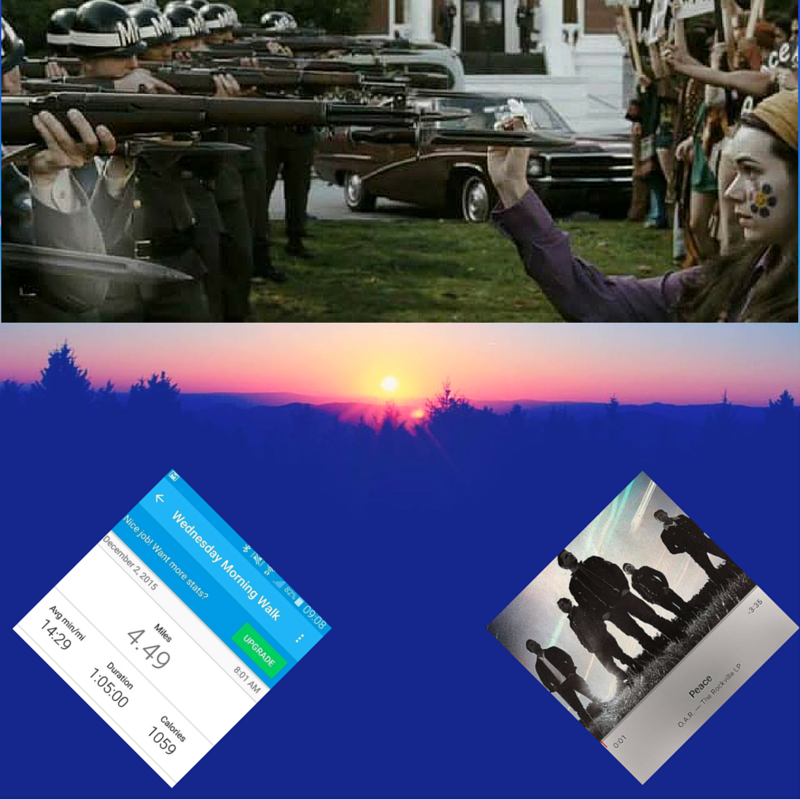
Suffering

The day
 Then he said to the disciples, “The days are coming when you will long to see one of the days of the Son of Man, and you will not see it.They will say to you, ‘Look there!’ or ‘Look here!’ Do not go, do not set off in pursuit. For as the lightning flashes and lights up the sky from one side to the other, so will the Son of Man be in his day. But first he must endure much suffering and be rejected by this generation. Just as it was in the days of Noah, so too it will be in the days of the Son of Man. They were eating and drinking, and marrying and being given in marriage, until the day Noah entered the ark, and the flood came and destroyed all of them. Likewise, just as it was in the days of Lot: they were eating and drinking, buying and selling, planting and building, but on the day that Lot left Sodom, it rained fire and sulfur from heaven and destroyed all of them—it will be like that on the day that the Son of Man is revealed. On that day, anyone on the housetop who has belongings in the house must not come down to take them away; and likewise anyone in the field must not turn back. Remember Lot’s wife. Those who try to make their life secure will lose it, but those who lose their life will keep it. I tell you, on that night there will be two in one bed; one will be taken and the other left. There will be two women grinding meal together; one will be taken and the other left.” Then they asked him, “Where, Lord?” He said to them, “Where the corpse is, there the vultures will gather.” (Luke 17:22-37, NRSV)
We look for the day of the Lord as a good thing. But the picture we get here is not a good one.
The days of Noah, they were eating and making merry, then Noah got on the boat and God destroyed the world.
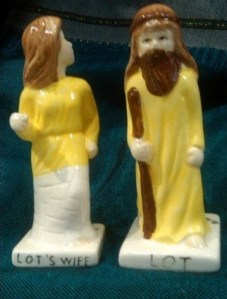
The days of Sodom and Lot left, they were eating and drinking until that day. Then God rained sulphur down from heaven, and Lot’s wife became salt.
God destroyed, and so it shall be for the Son of Man.
But the destruction of the Son of Man is not like the earth in the days of Noah or Sodom, for the destruction of the Son of Man means our salvation.
So we can endure the suffering, knowing He will be with us and will see us through to the other side.
Darkness ~ Collage
Peace

Peace
 In days to come the mountain of the LORD’S house shall be established as the highest of the mountains, and shall be raised up above the hills. Peoples shall stream to it, and many nations shall come and say: “Come, let us go up to the mountain of the LORD, to the house of the God of Jacob; that he may teach us his ways and that we may walk in his paths.” For out of Zion shall go forth instruction, and the word of the LORD from Jerusalem. He shall judge between many peoples, and shall arbitrate between strong nations far away; they shall beat their swords into plowshares, and their spears into pruning hooks; nation shall not lift up sword against nation, neither shall they learn war any more; but they shall all sit under their own vines and under their own fig trees, and no one shall make them afraid; for the mouth of the LORD of hosts has spoken. For all the peoples walk, each in the name of its god, but we will walk in the name of the LORD our God forever and ever. In that day, says the LORD, I will assemble the lame and gather those who have been driven away, and those whom I have afflicted. The lame I will make the remnant, and those who were cast off, a strong nation; and the LORD will reign over them in Mount Zion now and forevermore. (Micah 4:1-7, NRSV)
What a beautiful picture and thought.
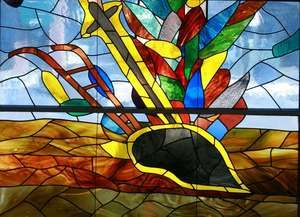
That there will be no more war. They will take their implements of war and make them into implements of harvesting or implements of peace.
Even though it is hard to imagine today, the day is coming. It is promised and was foretold not only by Micah but other prophets.
God’s promises are true. Swords will become plows and spears will be pruning hooks.
The Lord will make this happen. We will all live in peace under His teaching.

