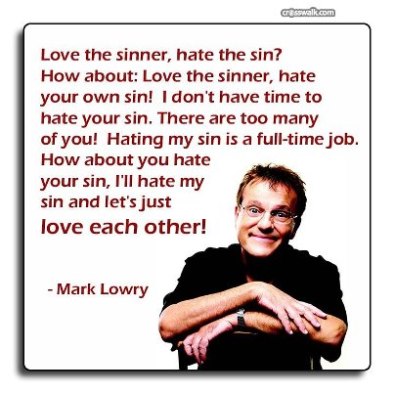
What is real verses what you have learned…

Now some of the people of Jerusalem were saying, “Is not this the man whom they are trying to kill? And here he is, speaking openly, but they say nothing to him! Can it be that the authorities really know that this is the Messiah? Yet we know where this man is from; but when the Messiah comes, no one will know where he is from.” Then Jesus cried out as he was teaching in the temple, “You know me, and you know where I am from. I have not come on my own. But the one who sent me is true, and you do not know him. I know him, because I am from him, and he sent me.” Then they tried to arrest him, but no one laid hands on him, because his hour had not yet come. Yet many in the crowd believed in him and were saying, “When the Messiah comes, will he do more signs than this man has done?”

The Pharisees heard the crowd muttering such things about him, and the chief priests and Pharisees sent temple police to arrest him. Jesus then said, “I will be with you a little while longer, and then I am going to him who sent me. You will search for me, but you will not find me; and where I am, you cannot come.” The Jews said to one another, “Where does this man intend to go that we will not find him? Does he intend to go to the Dispersion among the Greeks and teach the Greeks? What does he mean by saying, ‘You will search for me and you will not find me’ and ‘Where I am, you cannot come’?” (John 7:25-36 NRSV)

Why is it that the people here in John think that they will not know where the Messiah is from? Is it written somewhere in Scripture?

My ESV Study Bible has a footnote on verse 27 that tells us a little more details here. “7:27 But we know. Some rabbis taught that the Messiah would be wholly unknown until he set out to procure salvation for Israel. Others, however, were sure about his birthplace (v. 42; cf. Matt. 2:1–6).” Both later in this chapter in John and in Matthew the Messiah is to come from Bethlehem. But some of the rabbis were teaching we would not know where the messiah comes from. But either way if we know or don’t Jesus doesn’t fit because he is from Nazareth, right? So he can not be the one. Because he doesn’t fit what we learned about the messiah and what we have learned is the truth and so it has to fit our understanding our mold. God will not possibly do anything that does not fit what we have learned…

Are we that shallow and that self centered that we want to put God in a box and not allow God to do what God will do? By saying that we have learned it this way and that is the way God has to do it. That is not what happened when Jesus came. He was and is and always will be Christ, but that is not what they had learned the Christ would be or do, but that does not change that is how God did it. So I would venture that God will do it a way we think is wrong again.

Do not confuses the reality of God with what you have learned is how God should act. Allow him to rule and govern your life filling it abundantly with his reality, rather than judging what should be…

put them away…

If then you have been raised with Christ, seek the things that are above, where Christ is, seated at the right hand of God. Set your minds on things that are above, not on things that are on earth. For you have died, and your life is hidden with Christ in God. When Christ who is your life appears, then you also will appear with him in glory.
Put to death therefore what is earthly in you: sexual immorality, impurity, passion, evil desire, and covetousness, which is idolatry. On account of these the wrath of God is coming. In these you too once walked, when you were living in them. But now you must put them all away: anger, wrath, malice, slander, and obscene talk from your mouth. Do not lie to one another, seeing that you have put off the old self with its practices and have put on the new self, which is being renewed in knowledge after the image of its creator. Here there is not Greek and Jew, circumcised and uncircumcised, barbarian, Scythian, slave, free; but Christ is all, and in all. (Colossians 3:1-11 ESV)

But now you must put away all anger, wrath, malice, slander, and obscene talk… OK but what does that mean?

Well anger is a strong feeling of displeasure and usually of antagonism.

Malice is  desire to cause pain, injury, or distress to another.

Slander is the utterance of false charges or misrepresentations which defame and damage another’s reputation.

Obscene is  1: disgusting to the senses : repulsive

2 a: abhorrent to morality or virtue; specifically : designed to incite to lust or depravity
b: containing or being language regarded as taboo in polite usage <obscene lyrics>
c: repulsive by reason of crass disregard of moral or ethical principles <an obscene misuse of power>
d: so excessive as to be offensive <obscene wealth><obscene waste>

So still what does that mean? It is not specifically stated in all of those definitions, but it is implied in the ones it is not stated that this is something you have or feel towards someone else. Another person other than yourself is involved here, and you can not be self centered and worried about yourself! This is about elevating the other higher than yourself and looking out for their needs rather than yours.

If we can do that, then there is no separation or classification to us. We are united in the love that Christ has given to all of us. That is the love that allows us to look beyond ourselves, or above to something better than our own self preservation and to the needs of the other.

Look out for the other and not your own interests and God will lift you up.

Turn out the lights…

What then? Are we Jews any better off? No, not at all. For we have already charged that all, both Jews and Greeks, are under sin, as it is written:
“None is righteous, no, not one;
no one understands;
no one seeks for God.
All have turned aside; together they have become worthless;
no one does good,
not even one.”
“Their throat is an open grave;
they use their tongues to deceive.”
“The venom of asps is under their lips.”
“Their mouth is full of curses and bitterness.”
“Their feet are swift to shed blood;
in their paths are ruin and misery,
and the way of peace they have not known.”
“There is no fear of God before their eyes.”
Now we know that whatever the law says it speaks to those who are under the law, so that every mouth may be stopped, and the whole world may be held accountable to God. For by works of the law no human being will be justified in his sight, since through the law comes knowledge of sin. (Romans 3:9-20 ESV)

Paul has just been telling the Romans that those without the law, i.e. Gentiles are judges in their sin, and are not right with God. Then n Chapter 3 he asks then about Jews, if those with the law are any better off. Paul clearly states that none of us are in the good. We have all sinned and fallen short of God’s glory.

Well that is is turn out the lights, the party is over. We are all going to fry…

Paul tells us that knowing the law doesn’t help us, it actually helps us understand what we have done wrong. “Since through the law comes knowledge of sin.” You see if we do not know the law then we are better off, we can plea no knowledge of the situation. We have plausible deniability. If we don’t know we can’t be held accountable. But Paul covered that earlier in Romans. (I invite you to read that to see what he has to say about those who do not know the law.)

But you see Paul here does give us something. He shows us that the Law can not save us. He plainly says, “For by works of the law no human being will be justified in his sight.” By following the law to the t does not mean we are in, it does not justify us. We can not earn our way to the party with God. The law serves 2 purposes.

1. To give us civil order. We need order in society so there is not anarchy or chaos, and the law helps to maintain the boundaries of what is allowed and what is not allowed.

2. To convict us of our sins. By knowledge of the law we know what we should and should not do. What is sinful. However that does not mean that if something is not forbidden by the law that it is still not sinful. The law merely is a guide to helping us understand what could be sinful and separate us from God.

When we move to the third use of the law, salvation, is where we get into trouble. The Law can not save us, it will only condemn us. Paul clearly states that if we cling to the list of rules to make it we never will.

It is not about following the rules and being good boys and girls. It is about following Jesus.

So turn out the lights, because with only the law we will not be at the party…

But thanks be to God that the law was not the final word, and Jesus was is and always will be the final word.

Can you see Jesus’ head?

And Jesus went on with his disciples to the villages of Caesarea Philippi. And on the way he asked his disciples, “Who do people say that I am?” And they told him, “John the Baptist; and others say, Elijah; and others, one of the prophets.” And he asked them, “But who do you say that I am?” Peter answered him, “You are the Christ.” And he strictly charged them to tell no one about him.
And he began to teach them that the Son of Man must suffer many things and be rejected by the elders and the chief priests and the scribes and be killed, and after three days rise again. And he said this plainly. And Peter took him aside and began to rebuke him. But turning and seeing his disciples, he rebuked Peter and said, “Get behind me, Satan! For you are not setting your mind on the things of God, but on the things of man.”
And calling the crowd to him with his disciples, he said to them, “If anyone would come after me, let him deny himself and take up his cross and follow me. For whoever would save his life will lose it, but whoever loses his life for my sake and the gospel’s will save it. For what does it profit a man to gain the whole world and forfeit his soul? For what can a man give in return for his soul? For whoever is ashamed of me and of my words in this adulterous and sinful generation, of him will the Son of Man also be ashamed when he comes in the glory of his Father with the holy angels.” (Mark 8:27-38 ESV)

This is a great text, actually one of my favorites. And this morning I heard a wonderful sermon preached on this about standing up in the face of injustice, and how we are guaranteed 2 things, death and taxes…  No no no that is what the world gives us, but God gives us death and Resurrection. We want only the latter, but we have to do the first in order to get the second… But I digress…

I love this text for many reasons.

First it shows us the disciples are just like us. You see in the beginning Peter gets it! Jesus if the Christ, the Messiah the chosen one of God who has come to lead us into God’s kingdom! But then Jesus turns around and Peter gets stupid! Has that ever happened to you. You got it one minute you are there with God and everything is going along great and then you look around like what is going on here… The disciples were slow in the up take sometimes, so that should give all of us courage and hope to go on!

Second it has some stuff we can not see in the English. In verse 33 Jesus says to Peter, “ὀπίσω μου”. Now you are probably looking at the screen funny and scrolling up to see, no that is not what Jesus said, he said “Get behind me.” And you are correct, that is one translation for ὀπίσω μου.  But not the only way to translate that phrase. First of all lets look at the last word μου – this is a form of me. So the phrase would be _______ me. Hence the get behind. But just what is ὀπίσω?

It does mean “1) back, behind, after, afterwards  1a) of place: things that are behind  1b) of time: after” yet it also means to follow. It is one of the words used in the New Testament to say follow. The other times we see follow in our text today is ἀκολουθέω which means “1) to follow one who precedes, join him as his attendant,  accompany him  2) to join one as a disciple, become or be his disciple  2a) side with his party”. This word means more of an accompanying than follow behind. ὀπίσω μου is saying get behind me and know your place. I am the one sent from above, and you do not get to make the decision based upon what you think you know.

How many times do we do things because we think that is what God wants us to do? Because that is what we learned in Sunday School or at church? We learned that this is the way we need to do things for church. This is how we have to dress when we come to church and if someone comes in not dressed that we we need to inform them they are not welcomed. Or if they act in a way that is unbecoming, because we all know that Jesus surrounded himself with perfect disciples who got it right the first time and always… And we know only perfect people are accepted by God. (if this is the case we are all in big trouble!)

It is not up to us or our ways. Our ways are not God’s ways, and sometimes the stuff we learned is not the right way! Jesus came to show us the way and to help us see that it is not as clear as we thought.

So again if you have the bumper sticker “God is my Co-pilot” I think you better switch seats, and if you can’t see the back of Jesus’ head, you might want to slow down, and get in the right place….

Follow Jesus and the trip will be magnificent, but make sure you can always see your guide!

Why do you love the Lord?

I love the LORD, because he has heard
my voice and my pleas for mercy.
Because he inclined his ear to me,
therefore I will call on him as long as I live.
The snares of death encompassed me;
the pangs of Sheol laid hold on me;
I suffered distress and anguish.
Then I called on the name of the LORD:
“O LORD, I pray, deliver my soul!”
Gracious is the LORD, and righteous;
our God is merciful.
The LORD preserves the simple;
when I was brought low, he saved me.
Return, O my soul, to your rest;
for the LORD has dealt bountifully with you.
For you have delivered my soul from death,
my eyes from tears,
my feet from stumbling;
I will walk before the LORD
in the land of the living.
(Psalm 116:1-9 ESV)

I was struck by the first line of this psalm today as I read it. I love the Lord because He has heard
my voice and my pleas for mercy. Is that why you love the Lord?

I’ve heard a lot of people say they love God because He first loved me, when I was covered with sin and living a life that was far from Him He came in and took a hold of my life and loved me when I did not deserve it.

I do not think I have ever heard someone say that they love the Lord because He listened to them…

But really isn’t that what a relationship is? Isn’t that what true love does?

We think of love as an emotion, as something we feel. We get all cushy inside and we feel all bubbly… That is love, our insides turn and we get butterflies in our stomachs…

But is that really love? Is love an emotion?

Looked on Merriam Webster for the definition and there is a noun and a verb. Love is an action word…

I plated bass the other day for the first time in a while and it was fun and reminded me how much I love playing bass. I like to play bass, I desire to play bass, I take pleasure in playing bass… I love to play bass. Can we say the same thing about God? Do we desire God, do we like to spend time with God, do we take pleasure in God?

The 4th definition of love as a verb is to thrive in…

If we truly love God and follow after Him, our lives will thrive in God. He will feed us and lead us where we need to be.

So why do you love the Lord? Because He first loved you? Because He listens to you? Because your life can thrive in Him?

For all these reasons and more, I love the Lord, and I pray that you will too.

Works vs Faith

So also faith by itself, if it does not have works, is dead.
But someone will say, “You have faith and I have works.” Show me your faith apart from your works, and I will show you my faith by my works. You believe that God is one; you do well. Even the demons believe—and shudder! Do you want to be shown, you foolish person, that faith apart from works is useless? Was not Abraham our father justified by works when he offered up his son Isaac on the altar? You see that faith was active along with his works, and faith was completed by his works; and the Scripture was fulfilled that says, “Abraham believed God, and it was counted to him as righteousness”—and he was called a friend of God. You see that a person is justified by works and not by faith alone. And in the same way was not also Rahab the prostitute justified by works when she received the messengers and sent them out by another way? For as the body apart from the spirit is dead, so also faith apart from works is dead. (James 2:17-26 ESV)

So as a Lutheran this passage made me squirm in my seat. And a lot of my friends commented lately and I was taught if a passage of scripture makes you uneasy, you have to dig in deeper…

So Luther and Paul taught us “For by grace you have been saved through faith. And this is not your own doing; it is the gift of God, not a result of works, so that no one may boast.” (Ephesians 2:8-9 ESV) Ok actually it probably wasn’t Paul but somebody writing saying they were Paul, but in the epistle to the Ephesians we are told we are not saved by works. It is by faith. James tells us “You see that a person is justified by works and not by faith alone.” So which one is it?

Both Ephesians and James are a part of the cannon, and are scripture that are good for reproof and teaching, so is is faith alone, or is it works, with faith?

Now I know some of my friends would read the above and be squirming in their seats. But you left out Ephesians 2:10 as any good Lutheran would do. As Lutherans we are quick to pull the faith alone card and say we are saved by faith, and not by works so there is nothing I can do. We use this to get out of doing any kind of work for the Lord. But that is a misuse of scripture, because the verse after Ephesians 2:9 is Ephesians 2:10 which says, “For we are his workmanship, created in Christ Jesus for good works, which God prepared beforehand, that we should walk in them.” You see we are saved by grace through faith not by our works, but we were created to do the works of God. We need to do works.

James is right that a faith without works or action is not doing so well, it may not be dead yet, but it will be taking a ride on the cart very shortly. We have to show our faith through the life we live.

The thing that makes me squirm more than James saying our works justify us, is the other side of the coin. You see we are saved by grace through faith, and then we tell others what they must do to achieve heaven… We tell them how bad they are and our actions of exclusion keep them away from the relationship that saves them. We do not allow people access to God, by the actions we do. So when our actions get in the way of people coming to God, how do those works impact us?

We are quick to say we want to see faith in action, but the world sees our faith in action and they wonder why they want to be a part of it…

How can our works, our actions actually show the love we have been given?