DISPUTATION ON THE POWER AND EFFICACY OF INDULGENCES
Out of love and zeal for truth and the desire to bring it to light, the following theses will be publicly discussed at Wittenberg under the chairmanship of the reverend father Martin Lutther, Master of Arts and Sacred Theology and regularly appointed Lecturer on these subjects at that place. He requests that those who cannot be present to debate orally with us will do so by letter.
In the Name of Our Lord Jesus Christ. Amen.
1. When our Lord and Master Jesus Christ said, “Repent” [Matt. 4:17], he willed the entire life of believers to be one of repentance.
2. This word cannot be understood as referring to the sacrament of penance, that is, confession and satisfaction, as administered by the clergy.
3. Yet it does not mean solely inner repentance; such inner repentance is worthless unless it produces various outward mortifications of the flesh.
4. The penalty of sin remains as long as the hatred of self, that is, true inner repentance, until our entrance into the kingdom of heaven.
5. The pope neither desires nor is able to remit any penalties except those imposed by his own authority or that of the canons.
6. The pope cannot remit any guilt, except by declaring and showing that it has been remitted by God; or, to be sure, by remitting guilt in cases reserved to his judgment. If his right to grant remission in these cases were disregarded, the guilt would certainly remain unforgiven.
7. God remits guilt to no one unless at the same time he humbles him in all things and makes him submissive to his vicar, the priest.
8. The penitential canons are imposed only on the living, and, according to the canons themselves, nothing should be imposed on the dying.
9. Therefore the Holy Spirit through the pope is kind to us insofar as the pope in his decrees always makes exception of the article of death and of necessity.
10. Those priests act ignorantly and wickedly who, in the case of the dying, reserve canonical penalties for purgatory.
11. Those tares of changing the canonical penalty to the penalty of purgatory were evidently sown while the bishops slept [Matt. 13:25].
12. In former times canonical penalties were imposed, not after, but before absolution, as tests of true contrition.
13. The dying are freed by death from all penalties, are already dead as far as the canon laws are concerned, and have a right to be released from them.
14. Imperfect piety or love on the part of the dying person necessarily brings with it great fear; and the smaller the love, the greater the fear.
15. This fear or horror is sufficient in itself, to say nothing of other things, to constitute the penalty of purgatory, since it is very near the horror of despair.
16. Hell, purgatory, and heaven seem to differ the same as despair, fear, and assurance of salvation.
17. It seems as though for the souls in purgatory fear should necessarily decrease and love increase.
18. Furthermore, it does not seem proved, either by reason or Scripture, that souls in purgatory are outside the state of merit, that is, unable to grow in love.
19. Nor does it seem proved that souls in purgatory, at least not all of them, are certain and assured of their own salvation, even if we ourselves may be entirely certain of it.
20. Therefore the pope, when he uses the words “plenary remission of all penalties,” does not actually mean “all penalties,” but only those imposed by himself.
21. Thus those indulgence preachers are in error who say that a man is absolved from every penalty and saved by papal indulgences.
22. As a matter of fact, the pope remits to souls in purgatory no penalty which, according to canon law, they should have paid in this life.
23. If remission of all penalties whatsoever could be granted to anyone at all, certainly it would be granted only to the most perfect, that is, to very few.
24. For this reason most people are necessarily deceived by that indiscriminate and high-sounding promise of release from penalty.
25. That power which the pope has in general over purgatory corresponds to the power which any bishop or curate has in a particular way in his own diocese or parish.
26. The pope does very well when he grants remission to souls in purgatory, not by the power of the keys, which he does not have, but by way of intercession for them.
27. They preach only human doctrines who say that as soon as the money clinks into the money chest, the soul flies out of purgatory.
28. It is certain that when money clinks in the money chest, greed and avarice can be increased; but when the church intercedes, the result is in the hands of God alone.
29. Who knows whether all souls in purgatory wish to be redeemed, since we have exceptions in St. Severinus and St. Paschal, as related in a legend.
30. No one is sure of the integrity of his own contrition, much less of having received plenary remission.
31. The man who actually buys indulgences is as rare as he who is really penitent; indeed, he is exceedingly rare.
32. Those who believe that they can be certain of their salvation because they have indulgence letters will be eternally damned, together with their teachers.
33. Men must especially be on their guard against those who say that the pope’s pardons are that inestimable gift of God by which man is reconciled to him.
34. For the graces of indulgences are concerned only with the penalties of sacramental satisfaction established by man.
35. They who teach that contrition is not necessary on the part of those who intend to buy souls out of purgatory or to buy confessional privileges preach unchristian doctrine.
36. Any truly repentant Christian has a right to full remission of penalty and guilt, even without indulgence letters.
37. Any true Christian, whether living or dead, participates in all the blessings of Christ and the church; and this is granted him by God, even without indulgence letters.
38. Nevertheless, papal remission and blessing are by no means to be disregarded, for they are, as I have said [Thesis 6], the proclamation of the divine remission.
39. It is very difficult, even for the most learned theologians, at one and the same time to commend to the people the bounty of indulgences and the need of true contrition.
40. A Christian who is truly contrite seeks and loves to pay penalties for his sins; the bounty of indulgences, however, relaxes penalties and causes men to hate them—at least it furnishes occasion for hating them.
41. Papal indulgences must be preached with caution, lest people erroneously think that they are preferable to other good works of love.
42. Christians are to be taught that the pope does not intend that the buying of indulgences should in any way be compared with works of mercy.
43. Christians are to be taught that he who gives to the poor or lends to the needy does a better deed than he who buys indulgences.
44. Because love grows by works of love, man thereby becomes better. Man does not, however, become better by means of indulgences but is merely freed from penalties.
45. Christians are to be taught that he who sees a needy man and passes him by, yet gives his money for indulgences, does not buy papal indulgences but God’s wrath.
46. Christians are to be taught that, unless they have more than they need, they must reserve enough for their family needs and by no means squander it on indulgences.
47. Christians are to be taught that the buying of indulgences is a matter of free choice, not commanded.
48. Christians are to be taught that the pope, in granting indulgences, needs and thus desires their devout prayer more than their money.
49. Christians are to be taught that papal indulgences are useful only if they do not put their trust in them, but very harmful if they lose their fear of God because of them.
50. Christians are to be taught that if the pope knew the exactions of the indulgence preachers, he would rather that the basilica of St. Peter were burned to ashes than built up with the skin, flesh, and bones of his sheep.
51. Christians are to be taught that the pope would and should wish to give of his own money, even though he had to sell the basilica of St. Peter, to many of those from whom certain hawkers of indulgences cajole money.
52. It is vain to trust in salvation by indulgence letters, even though the indulgence commissary, or even the pope, were to offer his soul as security.
53. They are enemies of Christ and the pope who forbid altogether the preaching of the Word of God in some churches in order that indulgences may be preached in others.
54. Injury is done the Word of God when, in the same sermon, an equal or larger amount of time is devoted to indulgences than to the Word.
55. It is certainly the pope’s sentiment that if indulgences, which are a very insignificant thing, are celebrated with one bell, one procession, and one ceremony, then the gospel, which is the very greatest thing, should be preached with a hundred bells, a hundred processions, a hundred ceremonies.
56. The treasures of the church, out of which the pope distributes indulgences, are not sufficiently discussed or known among the people of Christ.
57. That indulgences are not temporal treasures is certainly clear, for many [indulgence] preachers do not distribute them freely but only gather them.
58. Nor are they the merits of Christ and the saints, for, even without the pope, the latter always work grace for the inner man, and the cross, death, and hell for the outer man.
59. St. Laurence said that the poor of the church were the treasures of the church, but he spoke according to the usage of the word in his own time.
60. Without want of consideration we say that the keys of the church, given by the merits of Christ, are that treasure;
61. For it is clear that the pope’s power is of itself sufficient for the remission of penalities and cases reserved by himself.
62. The true treasure of the church is the most holy gospel of the glory and grace of God.
63. But this treasure is naturally most odious, for it makes the first to be last [Matt. 20:16].
64. On the other hand, the treasure of indulgences is naturally most acceptable, for it makes the last to be first.
65. Therefore the treasures of the gospel are nets with which one formerly fished for men of wealth.
66. The treasures of indulgences are nets with which one now fishes for the wealth of men.
67. The indulgences which the demagogues acclaim as the greatest graces are actually understood to be such only insofar as they promote gain.
68. They are nevertheless in truth the most insignificant graces when compared with the grace of God and the piety of the cross.
69. Bishops and curates are bound to admit the commissaries of papal indulgences with all reverence.
70. But they are much more bound to strain their eyes and ears lest these men preach their own dreams instead of what the pope has commissioned.
71. Let him who speaks against the truth concerning papal indulgences be anathema and accursed;
72. But let him who guards against the lust and license of the indulgence preachers be blessed;
73. Just as the pope justly thunders against those who by any means whatsoever contrive harm to the sale of indulgences.
74. But much more does he intend to thunder against those who use indulgences as a pretext to contrive harm to holy love and truth.
75. To consider papal indulgences so great that they could absolve a man even if he had done the impossible and had violated the mother of God is madness.
76. We say on the contrary that papal indulgences cannot remove the very least of venial sins as far as guilt is concerned.
77. To say that even St. Peter, if he were now pope, could not grant greater graces is blasphemy against St. Peter and the pope.
78. We say on the contrary that even the present pope, or any pope whatsoever, has greater graces at his disposal, that is, the gospel, spiritual powers, gifts of healing, etc., as it is written in I Cor. 12[:28].
79. To say that the cross emblazoned with the papal coat of arms, and set up by the indulgence preachers, is equal in worth to the cross of Christ is blasphemy.
80. The bishops, curates, and theologians who permit such talk to be spread among the people will have to answer for this.
81. This unbridled preaching of indulgences makes it difficult even for learned men to rescue the reverence which is due the pope from slander or from the shrewd questions of the laity,
82. Such as: “Why does not the pope empty purgatory for the sake of holy love and the dire need of the souls that are there if he redeems an infinite number of souls for the sake of miserable money with which to build a church? The former reasons would be most just; the latter is most trivial.”
83. Again, “Why are funeral and anniversary masses for the dead continued and why does he not return or permit the withdrawal of the endowments founded for them, since it is wrong to pray for the redeemed?”
84. Again, “What is this new piety of God and the pope that for a consideration of money they permit a man who is impious and their enemy to buy out of purgatory the pious soul of a friend of God and do not rather, because of the need of that pious and beloved soul, free it for pure love’s sake?”
85. Again, “Why are the penitential canons, long since abrogated and dead in actual fact and through disuse, now satisfied by the granting of indulgences as though they were still alive and in force?”
86. Again, “Why does not the pope, whose wealth is today greater than the wealth of the richest Crassus, build this one basilica of St. Peter with his own money rather than with the money of poor believers?”
87. Again, “What does the pope remit or grant to those who by perfect contrition already have a right to full remission and blessings?”.
88. Again, “What greater blessing could come to the church than if the pope were to bestow these remissions and blessings on every believer a hundred times a day, as he now does but once?”
89. “Since the pope seeks the salvation of souls rather than money by his indulgences, why does he suspend the indulgences and pardons previously granted when they have equal efficacy?”
90. To repress these very sharp arguments of the laity by force alone, and not to resolve them by giving reasons, is to expose the church and the pope to the ridicule of their enemies and to make Christians unhappy.
91. If, therefore, indulgences were preached according to the spirit and intention of the pope, all these doubts would be readily resolved. Indeed, they would not exist.
92. Away then with all those prophets who say to the people of Christ, “Peace, peace,” and there is no peace! [Jer. 6:14].
93. Blessed be all those prophets who say to the people of Christ, “Cross, cross,” and there is no cross!
94. Christians should be exhorted to be diligent in following Christ, their head, through penalties, death, and hell;
95. And thus be confident of entering into heaven through many tribulations rather than through the false security of peace [Acts 14:22].
1517
Luther, M. (1999). Luther’s works, vol. 31: Career of the Reformer I. (J. J. Pelikan, H. C. Oswald, & H. T. Lehmann, Eds.) (Vol. 31, pp. 25–33). Philadelphia: Fortress Press.


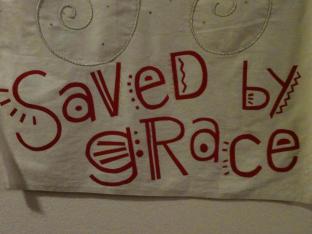 You were dead through the trespasses and sins in which you once lived, following the course of this world, following the ruler of the power of the air, the spirit that is now at work among those who are disobedient. All of us once lived among them in the passions of our flesh, following the desires of flesh and senses, and we were by nature children of wrath, like everyone else. But God, who is rich in mercy, out of the great love with which he loved us even when we were dead through our trespasses, made us alive together with Christ—by grace you have been saved—and raised us up with him and seated us with him in the heavenly places in Christ Jesus, so that in the ages to come he might show the immeasurable riches of his grace in kindness toward us in Christ Jesus. For by grace you have been saved through faith, and this is not your own doing; it is the gift of God—not the result of works, so that no one may boast. For we are what he has made us, created in Christ Jesus for good works, which God prepared beforehand to be our way of life. (Ephesians 2:1-10, NRSV)


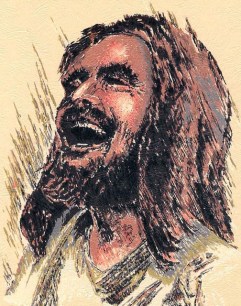 Why do the nations conspire, and the peoples plot in vain? The kings of the earth set themselves, and the rulers take counsel together, against the LORD and his anointed, saying, “Let us burst their bonds asunder, and cast their cords from us.” He who sits in the heavens laughs; the LORD has them in derision. Then he will speak to them in his wrath, and terrify them in his fury, saying, “I have set my king on Zion, my holy hill.” I will tell of the decree of the LORD: He said to me, “You are my son; today I have begotten you. Ask of me, and I will make the nations your heritage, and the ends of the earth your possession. You shall break them with a rod of iron, and dash them in pieces like a potter’s vessel.” Now therefore, O kings, be wise; be warned, O rulers of the earth. Serve the LORD with fear, with trembling kiss his feet, or he will be angry, and you will perish in the way; for his wrath is quickly kindled. Happy are all who take refuge in him. (Psalm 2, NRSV)
 aSacredRebel