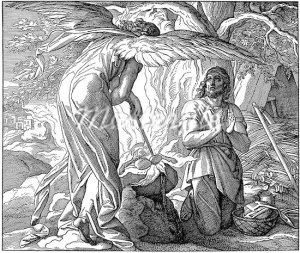
 Now the angel of the LORD came and sat under the oak at Ophrah, which belonged to Joash the Abiezrite, as his son Gideon was beating out wheat in the wine press, to hide it from the Midianites. The angel of the LORD appeared to him and said to him, “The LORD is with you, you mighty warrior.” Gideon answered him, “But sir, if the LORD is with us, why then has all this happened to us? And where are all his wonderful deeds that our ancestors recounted to us, saying, ‘Did not the LORD bring us up from Egypt?’ But now the LORD has cast us off, and given us into the hand of Midian.” Then the LORD turned to him and said, “Go in this might of yours and deliver Israel from the hand of Midian; I hereby commission you.” He responded, “But sir, how can I deliver Israel? My clan is the weakest in Manasseh, and I am the least in my family.” The LORD said to him, “But I will be with you, and you shall strike down the Midianites, every one of them.” Then he said to him, “If now I have found favor with you, then show me a sign that it is you who speak with me. Do not depart from here until I come to you, and bring out my present, and set it before you.” And he said, “I will stay until you return.” So Gideon went into his house and prepared a kid, and unleavened cakes from an ephah of flour; the meat he put in a basket, and the broth he put in a pot, and brought them to him under the oak and presented them. The angel of God said to him, “Take the meat and the unleavened cakes, and put them on this rock, and pour out the broth.” And he did so. Then the angel of the LORD reached out the tip of the staff that was in his hand, and touched the meat and the unleavened cakes; and fire sprang up from the rock and consumed the meat and the unleavened cakes; and the angel of the LORD vanished from his sight. Then Gideon perceived that it was the angel of the LORD; and Gideon said, “Help me, Lord GOD! For I have seen the angel of the LORD face to face.” But the LORD said to him, “Peace be to you; do not fear, you shall not die.” Then Gideon built an altar there to the LORD, and called it, The LORD is peace. To this day it still stands at Ophrah, which belongs to the Abiezrites. That night the LORD said to him, “Take your father’s bull, the second bull seven years old, and pull down the altar of Baal that belongs to your father, and cut down the sacred pole that is beside it; and build an altar to the LORD your God on the top of the stronghold here, in proper order; then take the second bull, and offer it as a burnt offering with the wood of the sacred pole that you shall cut down.” So Gideon took ten of his servants, and did as the LORD had told him; but because he was too afraid of his family and the townspeople to do it by day, he did it by night. When the townspeople rose early in the morning, the altar of Baal was broken down, and the sacred pole beside it was cut down, and the second bull was offered on the altar that had been built. So they said to one another, “Who has done this?” After searching and inquiring, they were told, “Gideon son of Joash did it.” Then the townspeople said to Joash, “Bring out your son, so that he may die, for he has pulled down the altar of Baal and cut down the sacred pole beside it.” But Joash said to all who were arrayed against him, “Will you contend for Baal? Or will you defend his cause? Whoever contends for him shall be put to death by morning. If he is a god, let him contend for himself, because his altar has been pulled down.” Therefore on that day Gideon was called Jerubbaal, that is to say, “Let Baal contend against him,” because he pulled down his altar. Then all the Midianites and the Amalekites and the people of the East came together, and crossing the Jordan they encamped in the Valley of Jezreel. But the spirit of the LORD took possession of Gideon; and he sounded the trumpet, and the Abiezrites were called out to follow him. He sent messengers throughout all Manasseh, and they too were called out to follow him. He also sent messengers to Asher, Zebulun, and Naphtali, and they went up to meet them. Then Gideon said to God, “In order to see whether you will deliver Israel by my hand, as you have said, I am going to lay a fleece of wool on the threshing floor; if there is dew on the fleece alone, and it is dry on all the ground, then I shall know that you will deliver Israel by my hand, as you have said.” And it was so. When he rose early next morning and squeezed the fleece, he wrung enough dew from the fleece to fill a bowl with water. Then Gideon said to God, “Do not let your anger burn against me, let me speak one more time; let me, please, make trial with the fleece just once more; let it be dry only on the fleece, and on all the ground let there be dew.” And God did so that night. It was dry on the fleece only, and on all the ground there was dew. (Judges 6:11-40, NRSV)
This is the story of God calling Gideon to be a mighty warrior. I love this story and I think of Gideon Tuba Warrior when I read or hear this story. It is the Veggie-Tales adaptation of this story.
But here we read Gideon asking for signs from God. First the food cooked on the rock and then the wet and dry fleece. But something caught my attention, this story has an element I have seen over and over in scripture and I have heard others say.
I am not worthy to be used by God. Or I’m not good enough to be used by God. I’m the youngest, or weakest, or I have no talents.
But that simply isn’t true.
Gideon says to the angel, “But sir, how can I deliver Israel? My clan is the weakest in Manasseh, and I am the least in my family.” But God responds, “I will be with you, and you will strike down the Midianites, everyone of them.”
You see when God calls us to a task, He will walk through it with us and give us what we need to complete His mission.
We are all called, regardless of how we see ourselves, God sees a mighty warrior fit for battle in His mission!
 In those days Hezekiah became sick and was at the point of death. The prophet Isaiah son of Amoz came to him, and said to him, “Thus says the LORD: Set your house in order, for you shall die; you shall not recover.” Then Hezekiah turned his face to the wall and prayed to the LORD: “Remember now, O LORD, I implore you, how I have walked before you in faithfulness with a whole heart, and have done what is good in your sight.” Hezekiah wept bitterly. Before Isaiah had gone out of the middle court, the word of the LORD came to him: “Turn back, and say to Hezekiah prince of my people, Thus says the LORD, the God of your ancestor David: I have heard your prayer, I have seen your tears; indeed, I will heal you; on the third day you shall go up to the house of the LORD. I will add fifteen years to your life. I will deliver you and this city out of the hand of the king of Assyria; I will defend this city for my own sake and for my servant David’s sake.” Then Isaiah said, “Bring a lump of figs. Let them take it and apply it to the boil, so that he may recover.” Hezekiah said to Isaiah, “What shall be the sign that the LORD will heal me, and that I shall go up to the house of the LORD on the third day?” Isaiah said, “This is the sign to you from the LORD, that the LORD will do the thing that he has promised: the shadow has now advanced ten intervals; shall it retreat ten intervals?” Hezekiah answered, “It is normal for the shadow to lengthen ten intervals; rather let the shadow retreat ten intervals.” The prophet Isaiah cried to the LORD; and he brought the shadow back the ten intervals, by which the sun had declined on the dial of Ahaz. (2 Kings 20:1-11, NRSV)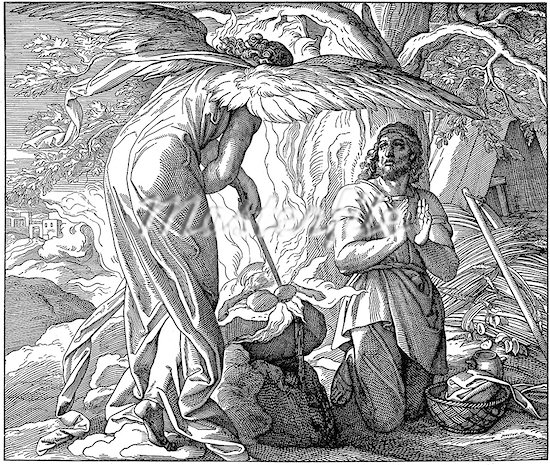

 “I tell you, my friends, do not fear those who kill the body, and after that can do nothing more. But I will warn you whom to fear: fear him who, after he has killed, has authority to cast into hell. Yes, I tell you, fear him! Are not five sparrows sold for two pennies? Yet not one of them is forgotten in God’s sight. But even the hairs of your head are all counted. Do not be afraid; you are of more value than many sparrows. “And I tell you, everyone who acknowledges me before others, the Son of Man also will acknowledge before the angels of God; but whoever denies me before others will be denied before the angels of God. And everyone who speaks a word against the Son of Man will be forgiven; but whoever blasphemes against the Holy Spirit will not be forgiven. When they bring you before the synagogues, the rulers, and the authorities, do not worry about how you are to defend yourselves or what you are to say; for the Holy Spirit will teach you at that very hour what you ought to say.” (Luke 12:4-12, NRSV)



 Transparency note: my bias is toward pastors in these situations, mostly because that’s my vantage point. That being said, I do recognize that it is really difficult when someone comes in and starts changing things a community has held dear for centuries. I welcome all responses.