 In the days when the judges ruled, there was a famine in the land, and a certain man of Bethlehem in Judah went to live in the country of Moab, he and his wife and two sons. The name of the man was Elimelech and the name of his wife Naomi, and the names of his two sons were Mahlon and Chilion; they were Ephrathites from Bethlehem in Judah. They went into the country of Moab and remained there. But Elimelech, the husband of Naomi, died, and she was left with her two sons. These took Moabite wives; the name of the one was Orpah and the name of the other Ruth. When they had lived there about ten years, both Mahlon and Chilion also died, so that the woman was left without her two sons and her husband. Then she started to return with her daughters-in-law from the country of Moab, for she had heard in the country of Moab that the Lord had considered his people and given them food. So she set out from the place where she had been living, she and her two daughters-in-law, and they went on their way to go back to the land of Judah. But Naomi said to her two daughters-in-law, “Go back each of you to your mother’s house. May the Lord deal kindly with you, as you have dealt with the dead and with me. The Lord grant that you may find security, each of you in the house of your husband.” Then she kissed them, and they wept aloud. They said to her, “No, we will return with you to your people.” But Naomi said, “Turn back, my daughters, why will you go with me? Do I still have sons in my womb that they may become your husbands? Turn back, my daughters, go your way, for I am too old to have a husband. Even if I thought there was hope for me, even if I should have a husband tonight and bear sons, would you then wait until they were grown? Would you then refrain from marrying? No, my daughters, it has been far more bitter for me than for you, because the hand of the Lord has turned against me.” Then they wept aloud again. Orpah kissed her mother-in-law, but Ruth clung to her. So she said, “See, your sister-in-law has gone back to her people and to her gods; return after your sister-in-law.” But Ruth said, “Do not press me to leave you or to turn back from following you! Where you go, I will go; Where you lodge, I will lodge; your people shall be my people, and your God my God. Where you die, I will die— there will I be buried. May the Lord do thus and so to me, and more as well, if even death parts me from you!” When Naomi saw that she was determined to go with her, she said no more to her. So the two of them went on until they came to Bethlehem. When they came to Bethlehem, the whole town was stirred because of them; and the women said, “Is this Naomi?” She said to them, “Call me no longer Naomi, call me Mara, for the Almighty has dealt bitterly with me. I went away full, but the Lord has brought me back empty; why call me Naomi when the Lord has dealt harshly with me, and the Almighty has brought calamity upon me?” So Naomi returned together with Ruth the Moabite, her daughter-in-law, who came back with her from the country of Moab. They came to Bethlehem at the beginning of the barley harvest. (Ruth 1:1-22, NRSV)
Here is the first chapter of the book of Ruth a wonderful little story of an outsider who becomes an insider and saves her family.
The story starts, “In the days when the judges ruled…” The story of Ruth comes right after the book of Judges in the Hebrew Scriptures, at least the way we Christians have them ordered, and Judges ends with, “In those days there was no king in Israel; all the people did what was right in their own eyes.” So whatever a person did was ok because it looked good to them…
But Ruth had different ideas.
There is so much pain and anguish in our lives and we sometimes struggle to see the hope. That is where this chapter takes us, you see Elimelech took his wife, Naomi, and his two sons, Mahlon and Chilion, from their home in Bethlehem because there was a famine and he had to do something to take care of his family. So he packed them up and moved them to Moab where there was obviously more provision than in Bethlehem. Here in Moab, Elimelech’s sons found women they wanted to spend the rest of their lives with and got married, or Elimelech arranged the marriages, but either way, the sons took wives, and then all of the men died. It is as if it went from bad to worse. They moved away from home and then the providers for the family all die. Then Naomi tries to send the daughters-in-law back to their kinsmen so they can be cared for. Naomi is returning to Bethlehem and the Moabite women will not be accepted or at least Naomi thinks that. Plus she will have to find family to take her in and she is not sure if they will take her daughters-in-law also. Naomi urges them to care for themselves and return to their family. And Orpah does. But Ruth does not. She has found love in a mother-in-law and a hope that God will protect them.
You see in all of the darkness, famine, and death, there is hope. Ruth says to Naomi, “Do not press me to leave you or to turn back from following you! Where you go, I will go; Where you lodge, I will lodge; your people shall be my people, and your God my God. Where you die, I will die— there will I be buried. May the Lord do thus and so to me, and more as well, if even death parts me from you!” I will not leave you. You are my kin and I will be with you. And Naomi returned to Bethlehem with Ruth.
And then the last glimmer of hope, it was the beginning of the barley harvest. It was the beginning of the gathering of the food. The famine was over and the harvest has begun! Even in the darkness, there is always hope!
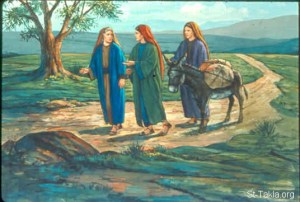 Then she started to return with her daughters-in-law from the country of Moab, for she had heard in the country of Moab that the Lord had considered his people and given them food. So she set out from the place where she had been living, she and her two daughters-in-law, and they went on their way to go back to the land of Judah. (Ruth 1:6-7, NRSV)
 In the days when the judges ruled, there was a famine in the land, and a certain man of Bethlehem in Judah went to live in the country of Moab, he and his wife and two sons. The name of the man was Elimelech and the name of his wife Naomi, and the names of his two sons were Mahlon and Chilion; they were Ephrathites from Bethlehem in Judah. They went into the country of Moab and remained there. But Elimelech, the husband of Naomi, died, and she was left with her two sons. These took Moabite wives; the name of the one was Orpah and the name of the other Ruth. When they had lived there about ten years, both Mahlon and Chilion also died, so that the woman was left without her two sons and her husband. (Ruth 1:1-5, NRSV)
 We know that those who are born of God do not sin, but the one who was born of God protects them, and the evil one does not touch them. We know that we are God’s children, and that the whole world lies under the power of the evil one. And we know that the Son of God has come and has given us understanding so that we may know him who is true; and we are in him who is true, in his Son Jesus Christ. He is the true God and eternal life. Little children, keep yourselves from idols. (1 John 5:18-21, NRSV)
 And this is the boldness we have in him, that if we ask anything according to his will, he hears us. And if we know that he hears us in whatever we ask, we know that we have obtained the requests made of him. If you see your brother or sister committing what is not a mortal sin, you will ask, and God will give life to such a one—to those whose sin is not mortal. There is sin that is mortal; I do not say that you should pray about that. All wrongdoing is sin, but there is sin that is not mortal. (1 John 5:14-17, NRSV)
 I write these things to you who believe in the name of the Son of God, so that you may know that you have eternal life. (1 John 5:13, NRSV)
 If we receive human testimony, the testimony of God is greater; for this is the testimony of God that he has testified to his Son. Those who believe in the Son of God have the testimony in their hearts. Those who do not believe in God have made him a liar by not believing in the testimony that God has given concerning his Son. And this is the testimony: God gave us eternal life, and this life is in his Son. Whoever has the Son has life; whoever does not have the Son of God does not have life. (1 John 5:9-12, NRSV)
 This is the one who came by water and blood, Jesus Christ, not with the water only but with the water and the blood. And the Spirit is the one that testifies, for the Spirit is the truth. There are three that testify: the Spirit and the water and the blood, and these three agree. (1 John 5:6-8, NRSV)
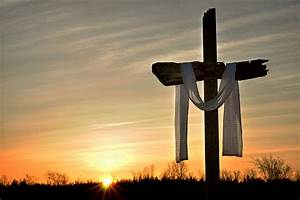 Everyone who believes that Jesus is the Christ has been born of God, and everyone who loves the parent loves the child. By this we know that we love the children of God, when we love God and obey his commandments. For the love of God is this, that we obey his commandments. And his commandments are not burdensome, for whatever is born of God conquers the world. And this is the victory that conquers the world, our faith. Who is it that conquers the world but the one who believes that Jesus is the Son of God? (1 John 5:1-5, NRSV)
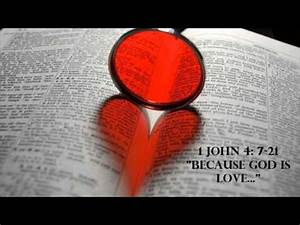 Beloved, let us love one another, because love is from God; everyone who loves is born of God and knows God. Whoever does not love does not know God, for God is love. God’s love was revealed among us in this way: God sent his only Son into the world so that we might live through him. In this is love, not that we loved God but that he loved us and sent his Son to be the atoning sacrifice for our sins. Beloved, since God loved us so much, we also ought to love one another. No one has ever seen God; if we love one another, God lives in us, and his love is perfected in us. By this we know that we abide in him and he in us, because he has given us of his Spirit. And we have seen and do testify that the Father has sent his Son as the Savior of the world. God abides in those who confess that Jesus is the Son of God, and they abide in God. So we have known and believe the love that God has for us. God is love, and those who abide in love abide in God, and God abides in them. Love has been perfected among us in this: that we may have boldness on the day of judgment, because as he is, so are we in this world. There is no fear in love, but perfect love casts out fear; for fear has to do with punishment, and whoever fears has not reached perfection in love. We love because he first loved us. Those who say, “I love God,” and hate their brothers or sisters, are liars; for those who do not love a brother or sister whom they have seen, cannot love God whom they have not seen. The commandment we have from him is this: those who love God must love their brothers and sisters also. (1 John 4:7-21, NRSV)
