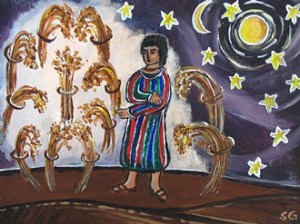
 Jacob settled in the land where his father had lived as an alien, the land of Canaan. This is the story of the family of Jacob. Joseph, being seventeen years old, was shepherding the flock with his brothers; he was a helper to the sons of Bilhah and Zilpah, his father’s wives; and Joseph brought a bad report of them to their father. Now Israel loved Joseph more than any other of his children, because he was the son of his old age; and he had made him a long robe with sleeves. But when his brothers saw that their father loved him more than all his brothers, they hated him, and could not speak peaceably to him. Once Joseph had a dream, and when he told it to his brothers, they hated him even more. He said to them, “Listen to this dream that I dreamed. There we were, binding sheaves in the field. Suddenly my sheaf rose and stood upright; then your sheaves gathered around it, and bowed down to my sheaf.” His brothers said to him, “Are you indeed to reign over us? Are you indeed to have dominion over us?” So they hated him even more because of his dreams and his words. He had another dream, and told it to his brothers, saying, “Look, I have had another dream: the sun, the moon, and eleven stars were bowing down to me.” But when he told it to his father and to his brothers, his father rebuked him, and said to him, “What kind of dream is this that you have had? Shall we indeed come, I and your mother and your brothers, and bow to the ground before you?”So his brothers were jealous of him, but his father kept the matter in mind. Now his brothers went to pasture their father’s flock near Shechem. And Israel said to Joseph, “Are not your brothers pasturing the flock at Shechem? Come, I will send you to them.” He answered, “Here I am.” So he said to him, “Go now, see if it is well with your brothers and with the flock; and bring word back to me.” So he sent him from the valley of Hebron. He came to Shechem, and a man found him wandering in the fields; the man asked him, “What are you seeking?” “I am seeking my brothers,” he said; “tell me, please, where they are pasturing the flock.”The man said, “They have gone away, for I heard them say, ‘Let us go to Dothan.’“ So Joseph went after his brothers, and found them at Dothan. They saw him from a distance, and before he came near to them, they conspired to kill him. They said to one another, “Here comes this dreamer. Come now, let us kill him and throw him into one of the pits; then we shall say that a wild animal has devoured him, and we shall see what will become of his dreams.” But when Reuben heard it, he delivered him out of their hands, saying, “Let us not take his life.” Reuben said to them, “Shed no blood; throw him into this pit here in the wilderness, but lay no hand on him” —that he might rescue him out of their hand and restore him to his father. So when Joseph came to his brothers, they stripped him of his robe, the long robe with sleeves that he wore; and they took him and threw him into a pit. The pit was empty; there was no water in it. (Genesis 37:1-24, NRSV)
When we focus on what others have we can easily get pulled into the fires of jealousy. You see we all have within us the ability to focus only on ourselves and to want what is best for us.
Like Joseph’s brothers who ultimately think that if they kill Joseph their father will have more love for them. I struggle with this every day and trying to make sure that my daughters don’t think that I love any one of them more than the others. I don’t want to play into the jealousy that is there.
How can we live our lives so that we help others avoid jealousy and focus more on loving others?
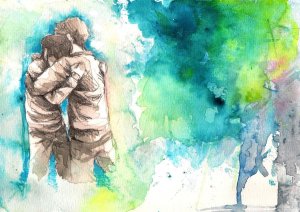 Now Jacob looked up and saw Esau coming, and four hundred men with him. So he divided the children among Leah and Rachel and the two maids. He put the maids with their children in front, then Leah with her children, and Rachel and Joseph last of all. He himself went on ahead of them, bowing himself to the ground seven times, until he came near his brother. But Esau ran to meet him, and embraced him, and fell on his neck and kissed him, and they wept. When Esau looked up and saw the women and children, he said, “Who are these with you?” Jacob said, “The children whom God has graciously given your servant.” Then the maids drew near, they and their children, and bowed down; Leah likewise and her children drew near and bowed down; and finally Joseph and Rachel drew near, and they bowed down. Esau said, “What do you mean by all this company that I met?” Jacob answered, “To find favor with my lord.” But Esau said, “I have enough, my brother; keep what you have for yourself.” Jacob said, “No, please; if I find favor with you, then accept my present from my hand; for truly to see your face is like seeing the face of God—since you have received me with such favor. Please accept my gift that is brought to you, because God has dealt graciously with me, and because I have everything I want.” So he urged him, and he took it. Then Esau said, “Let us journey on our way, and I will go alongside you.” But Jacob said to him, “My lord knows that the children are frail and that the flocks and herds, which are nursing, are a care to me; and if they are overdriven for one day, all the flocks will die. Let my lord pass on ahead of his servant, and I will lead on slowly, according to the pace of the cattle that are before me and according to the pace of the children, until I come to my lord in Seir.” So Esau said, “Let me leave with you some of the people who are with me.” But he said, “Why should my lord be so kind to me?” (Genesis 33:1-15, NRSV)
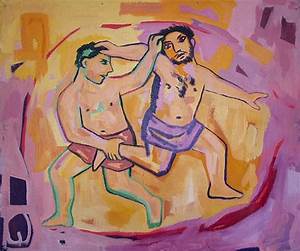 These are the descendants of Isaac, Abraham’s son: Abraham was the father of Isaac, and Isaac was forty years old when he married Rebekah, daughter of Bethuel the Aramean of Paddan-aram, sister of Laban the Aramean. Isaac prayed to the
 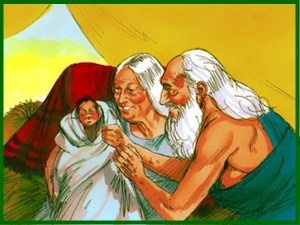 The
The 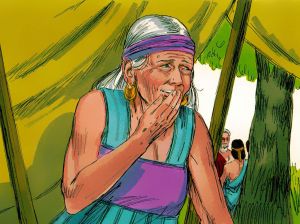 The
The 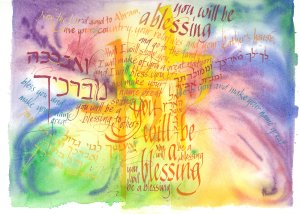 Now the
  Now these are the descendants of Terah. Terah was the father of Abram, Nahor, and Haran; and Haran was the father of Lot. Haran died before his father Terah in the land of his birth, in Ur of the Chaldeans. Abram and Nahor took wives; the name of Abram’s wife was Sarai, and the name of Nahor’s wife was Milcah. She was the daughter of Haran the father of Milcah and Iscah. Now Sarai was barren; she had no child. Terah took his son Abram and his grandson Lot son of Haran, and his daughter-in-law Sarai, his son Abram’s wife, and they went out together from Ur of the Chaldeans to go into the land of Canaan; but when they came to Haran, they settled there. The days of Terah were two hundred and five years; and Terah died in Haran. (Genesis 11:27-32, NRSV)
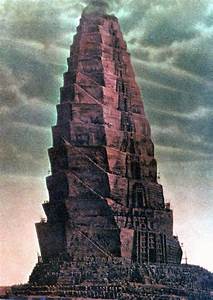 Now the whole earth had one language and the same words. And as they migrated from the east, they came upon a plain in the land of Shinar and settled there. And they said to one another, ‘Come, let us make bricks, and burn them thoroughly.’ And they had brick for stone, and bitumen for mortar. Then they said, ‘Come, let us build ourselves a city, and a tower with its top in the heavens, and let us make a name for ourselves; otherwise we shall be scattered abroad upon the face of the whole earth.’The
 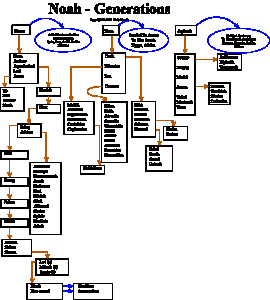 Canaan became the father of Sidon his firstborn, and Heth, and the Jebusites, the Amorites, the Girgashites, the Hivites, the Arkites, the Sinites, the Arvadites, the Zemarites, and the Hamathites. Afterwards the families of the Canaanites spread abroad. And the territory of the Canaanites extended from Sidon, in the direction of Gerar, as far as Gaza, and in the direction of Sodom, Gomorrah, Admah, and Zeboiim, as far as Lasha. These are the descendants of Ham, by their families, their languages, their lands, and their nations. To Shem also, the father of all the children of Eber, the elder brother of Japheth, children were born. The descendants of Shem: Elam, Asshur, Arpachshad, Lud, and Aram. The descendants of Aram: Uz, Hul, Gether, and Mash. Arpachshad became the father of Shelah; and Shelah became the father of Eber. To Eber were born two sons: the name of one was Peleg, for in his days the earth was divided, and his brother’s name was Joktan. Joktan became the father of Almodad, Sheleph, Hazarmaveth, Jerah, Hadoram, Uzal, Diklah, Obal, Abimael, Sheba, Ophir, Havilah, and Jobab; all these were the descendants of Joktan. The territory in which they lived extended from Mesha in the direction of Sephar, the hill country of the east. These are the descendants of Shem, by their families, their languages, their lands, and their nations. These are the families of Noah’s sons, according to their genealogies, in their nations; and from these the nations spread abroad on the earth after the flood. (Genesis 10:15-32, NRSV)
 aSacredRebel